

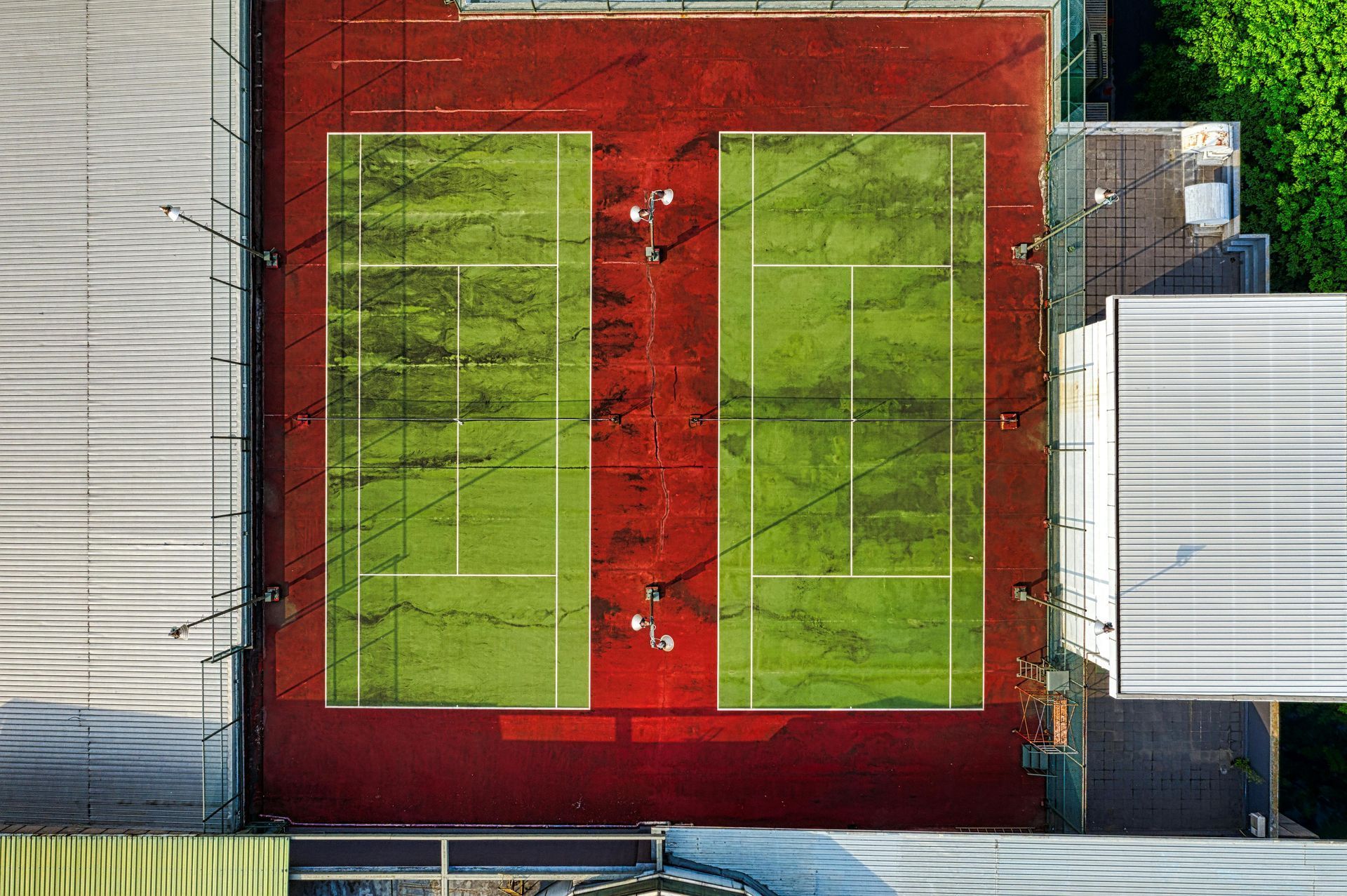
Post-Tension Concrete vs Asphalt Tennis Court: Which Fits Florida Soil?

Mor-Sports Group • November 2, 2026

Share this article

Asphalt costs less to build, but it's a flexible pavement that will crack over time, especially where the base gets wet or settles. Post-tension concrete costs more up front, resists cracking far better, and usually lasts much longer between rebuilds. On Florida's sandy, high water table and sinkhole-prone ground, the right answer depends on what's under your site, so start with a soil investigation, not a surface catalog.

How Each Court Is Built

Asphalt courts

An asphalt court is a hot mix pavement laid over a compacted stone base. Mor-Sports' standard asphalt build uses a laser-graded lime rock sub base set to ASBA grades and slopes, a laser-paved hot asphalt base, an optional cushion system, then acrylic color and lines. The American Sports Builders Association's Tennis Courts Construction and Maintenance Manual (11th edition, 2024) gives asphalt courts their own chapter, including control joints and finished pavement tolerances.

Post-tension concrete courts

A post-tension (PT) court is a single concrete slab with a grid of steel cables cast inside. After the concrete gains strength, crews stress the cables, squeezing the slab into compression. ASBA's construction guidelines call PT the preferred method for concrete courts because a full court can be poured in one piece with no expansion joints in the play area, which limits surface cracking. That guideline (as republished by coatings maker Nova Sports) calls for cables no more than 4 feet apart, a 10 mil vapor barrier, concrete of at least 3,000 psi, seven days of moist curing, and strand spacing that accounts for the site's soil.

The Post-Tensioning Institute's court-specific guide is PTI DC10.3-20, Design, Construction, and Maintenance of Post-Tensioned Concrete Courts(published October 2020). It covers subgrade prep, drainage, tendon stressing, inspection and maintenance. You may also hear of PTI DC10.5-24, the standard for PT foundations on expansive and stable soils. That's a building foundation standard. For a court, DC10.3 is the document to ask your engineer about.

We build both in our tennis court construction work, so the ground decides, not us.

What Florida Soil Does to a Court

Sandy soil and a high water table

Much of peninsular Florida sits on flatwoods soils. UF/IFAS describes flatwoods as level ground where the water table rises to within 5 to 20 inches of the surface at least once a growing season, and many of these soils have an organic hardpan 12 to 40 inches down. UF/IFAS also notes that most Florida Spodosols are poorly or very poorly drained, including Myakka, the official state soil.

Water is the enemy of any court base. ASBA guidance lists inadequate drainage, improper slope, base movement and poor compaction as causes of asphalt cracking, and says that where those conditions exist, reconstruction may be needed instead of repair. It also ties depressions to decaying organic matter or poorly compacted subbase. That's why a Florida court should sit above the surrounding ground, with swales or drains carrying water away.

Karst and sinkholes

The U.S. Geological Survey notes that Florida is largely underlain by limestone and highly susceptible to sinkholes. The Florida Geological Survey explains that slightly acidic groundwater slowly dissolves cavities in the limestone, and the ground above can either sag (cover-subsidence) or drop suddenly (cover-collapse). Its sinkhole FAQ lists likely triggers including drought followed by heavy rain, construction earthwork, heavy loading and heavy groundwater pumping.

The FAQ also notes that ground-penetrating radar, resistivity surveys and borings can look for buried voids, but they're costly and not always conclusive. And many "sinkholes" are really other settlement, such as buried stumps, organic layers or poorly compacted fill. A geotechnical report sorts out which risk you have. The FGS also keeps a statewide subsidence incident database.

Be realistic. No court system stops a true sinkhole. What PT concrete does better is bridge small soft spots and uneven settlement, because the compressed slab acts as one stiff plate. A design and engineering firm writing on court systems says PT can span unstable soils where asphalt would fail, and PTI says PT slabs resist the stresses that soil movement puts on them.

Cracking: The Real Difference

Asphalt is flexible pavement, so cracking is expected over its life. ASBA's guidance on asphalt court problems notes that asphalt shrinks as it ages and that overlays may not stop major cracks from coming back through. GMB notes that ASBA recommends saw-cut joints in asphalt courts to steer cracking outside the play area, but new cracks can still form inside it. The USTA warns that paving new asphalt over a cracked court lets the old cracks reflect up through the new layer.

PT concrete isn't crack-proof, but the compression holds the slab tight. PTI's DC10.3-20 has a section on restraint cracks, so they can still occur. Workmanship matters more with PT, because stressing the cables takes trained crews and careful records.

Lifespan

  • Asphalt: The USTA puts asphalt court lifespan at about 15 years. GMB describes the usual pattern: crack repair before the first resurfacing, larger repairs around year 10 or 11, and owners weighing full replacement by year 15.
  • Post-tension concrete: GMB puts PT life expectancy at 25 years or more, with some courts lasting 30 years with only resurfacing.
  • Both: The acrylic color system on either base needs resurfacing on a regular cycle. GMB estimates about every five years. See our guide on how often to resurface a tennis court for the signs.

GMB also estimated downtime over 25 years at up to 79 days for asphalt versus about 12 days for PT. For a busy HOA or club, lost court days are a real cost. For more on surface life by material, read our tennis court surface durability comparison.

Upfront vs Long-Term Cost Drivers

We don't publish prices because every site is different. Here's what moves the number.

What drives upfront cost

  • Base system: PT needs a vapor barrier, cable grid, pumped concrete, stressing equipment and a specialty crew. Asphalt uses standard paving equipment, though ASBA-grade court mixes cost more than parking lot mixes, according to GMB.
  • Site prep: Removing muck or organic soil, importing fill, raising the pad above grade and compaction testing. Poor soil raises cost for both systems.
  • Drainage: Swales, edge drains or subsurface drains on high water table sites.
  • Geotechnical work: Borings, and on karst sites possibly ground-penetrating radar.
  • Number of courts: Multi-court batteries spread mobilization across more area.

What drives long-term cost

  • Crack repair before each resurfacing (mostly an asphalt cost)
  • How soon full reconstruction is needed
  • Court downtime and lost play or revenue
  • Drainage maintenance on either system

GMB's lifecycle analysis found PT costs more up front but less in total over 25 years. Your result depends on soil, use and how long you'll keep the courts.

How to Decide

  1. Order a geotechnical report with borings. On known karst ground, ask whether ground-penetrating radar is worth it.
  2. Check the FGS subsidence incident data for your area.
  3. Ask bidders which system they recommend for that soil, and why, in writing.
  4. For PT, ask for the engineer's slab design, stressing records and whether the work follows PTI DC10.3-20.
  5. For asphalt, ask how the base, compaction and drainage will handle the water table, and where control joints go.
  6. Compare total cost over the years you plan to own the courts, not just the build price.

The same logic applies in Southern Alabama, where local soil and drainage conditions should drive the choice the same way.

Frequently Asked Questions

Is post-tension concrete better than asphalt for tennis courts in Florida?

On soft, wet or uneven soil, PT usually performs better because it resists cracking and bridges small settlement. On stable, well drained sites with a tighter budget, a well built asphalt court can still be a good choice.

Will a post-tension court survive a sinkhole?

No slab is built to survive a true sinkhole collapse. PT handles minor settlement and soft spots better than asphalt, and a geotechnical study is the best way to judge the risk before you build.

How long do asphalt and post-tension tennis courts last?

The USTA puts asphalt at about 15 years. GMB puts PT at 25 years or more. Both need resurfacing on a regular cycle.

Can you put a post-tension slab over an old asphalt court?

Yes, it's an option. ASBA's 2024 manual includes a detail for overlaying a hard court with a PT concrete slab. Whether it fits your site depends on grades, drainage and fence and net post heights.

Mor-Sports Group has built courts across Florida and Southern Alabama since 1986, and our self-performing crews won a 2026 ASBA Distinguished Facility Award in the Tennis and Pickleball Facility category for Regency at Babcock Ranch. Request a free estimate and we'll help you choose the right base for your ground.

Recent Posts

Backyard tennis court
By Mor-Sports Group • October 30, 2026
How to get HOA architectural approval for a backyard tennis or pickleball court in Florida. Court builder since 1986. Get a free estimate.
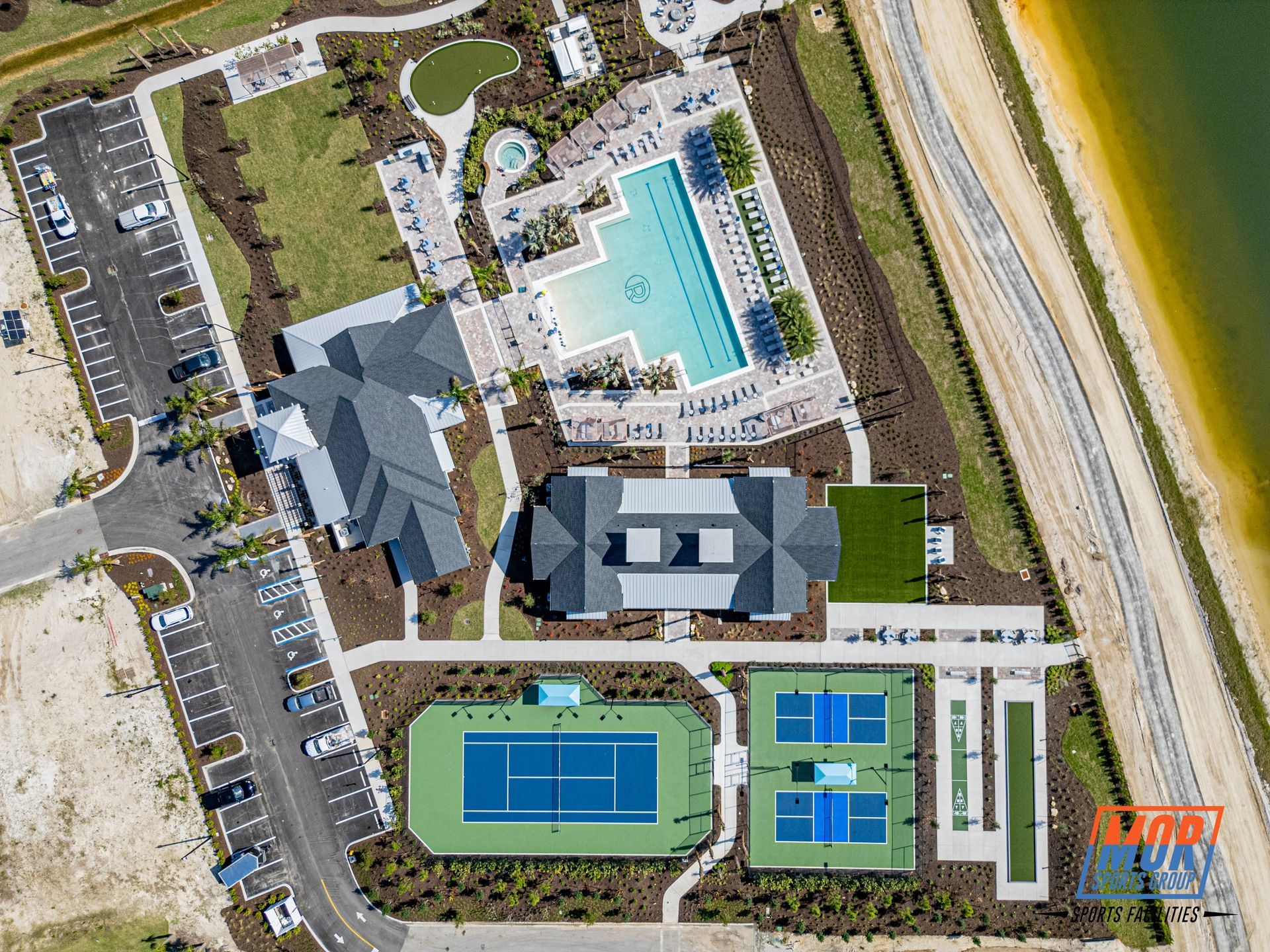
Pickleball courts at Regency at Babcock Ranch
By Mor-Sports Group • October 28, 2026
Plan pickleball courts for a Florida 55+ community: court count, shade, cushion, lighting, ADA access. From an ASBA award-winning builder. Free estimate.
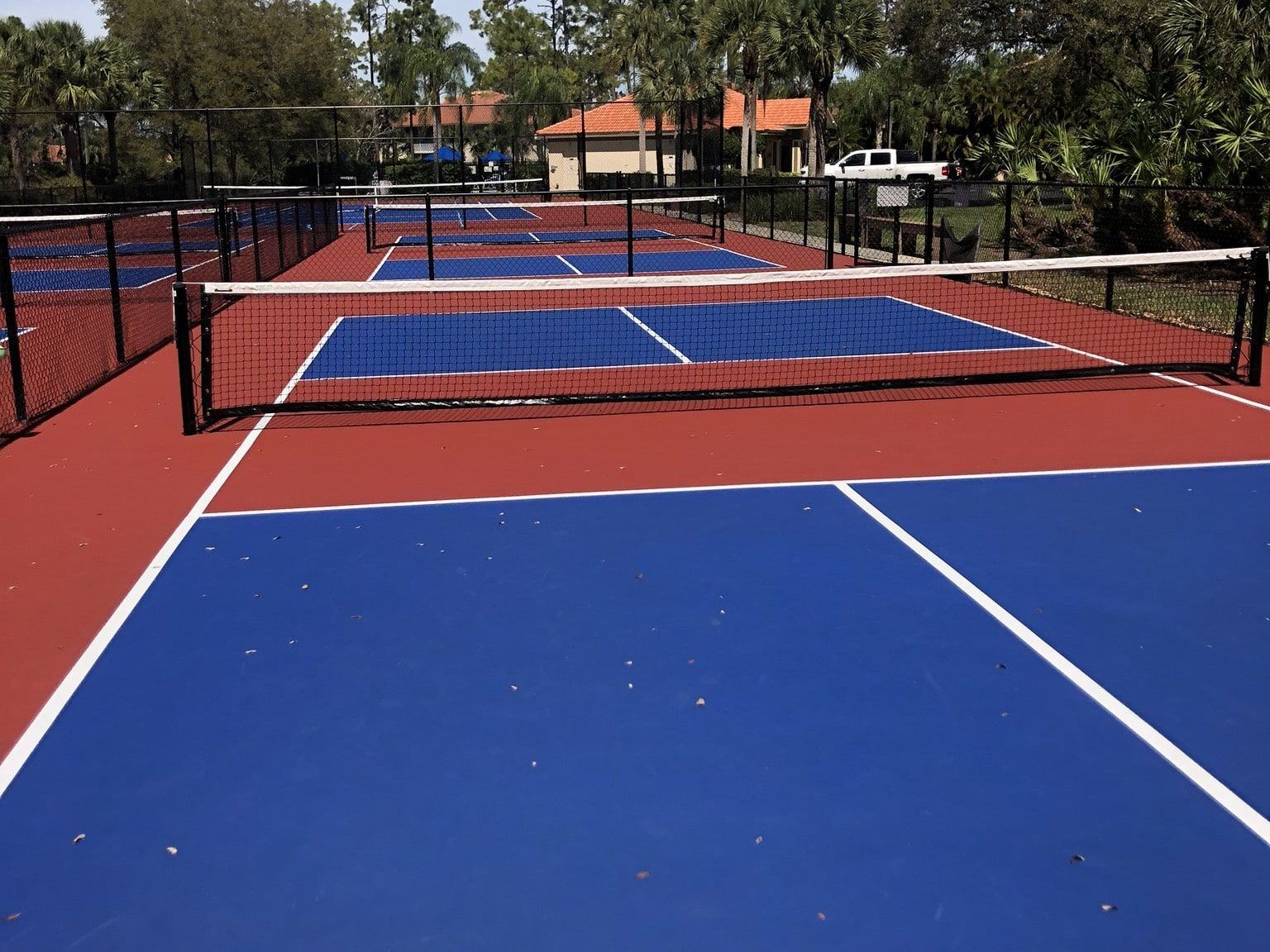
Completed pickleball courts built by Mor-Sports Group
By Mor-Sports Group • October 26, 2026
How Florida HOAs convert tennis courts to pickleball: blended lines, 4-court layouts, board votes, noise. Court builder since 1986. Free estimate.
Court project plans on a table
By Mor-Sports Group • October 23, 2026
Which Florida county office issues tennis and pickleball court permits, and what each one checks. From a court builder since 1986. Get a free estimate.
Empty blue tennis court with green sidelines, net, and a beachside resort in the background
By Mor-Sports Group • September 3, 2026
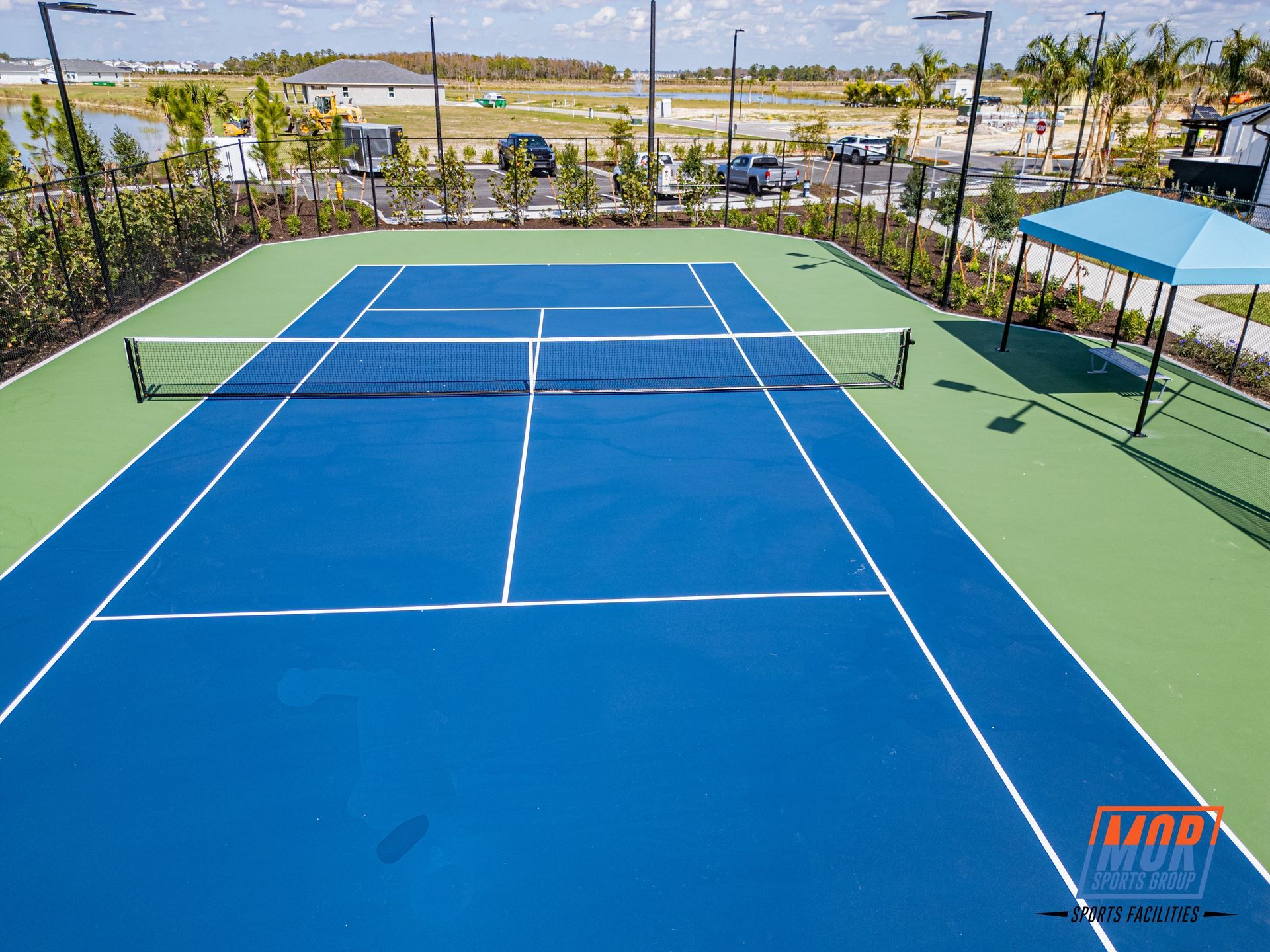
Mor-Sports Group won a 2026 ASBA Facility Award in the Tennis and Pickleball Facility category for the courts we built at Regency at Babcock Ranch in Punta Gorda, Florida. Here is how the project was built.
Podcast interview graphic with two speakers and bold text: “The Standard for Sports Construction”
By Mor-Sports Group • September 2, 2026
Nick Blackwood and Leslie LoGelfo joined the Move Swiftly podcast to talk self-performed court construction, the rise of padel, cushion surfaces and what communities should ask before they build.
Empty red tennis court with net, ball cart, and green fence under a clear blue sky
May 29, 2026
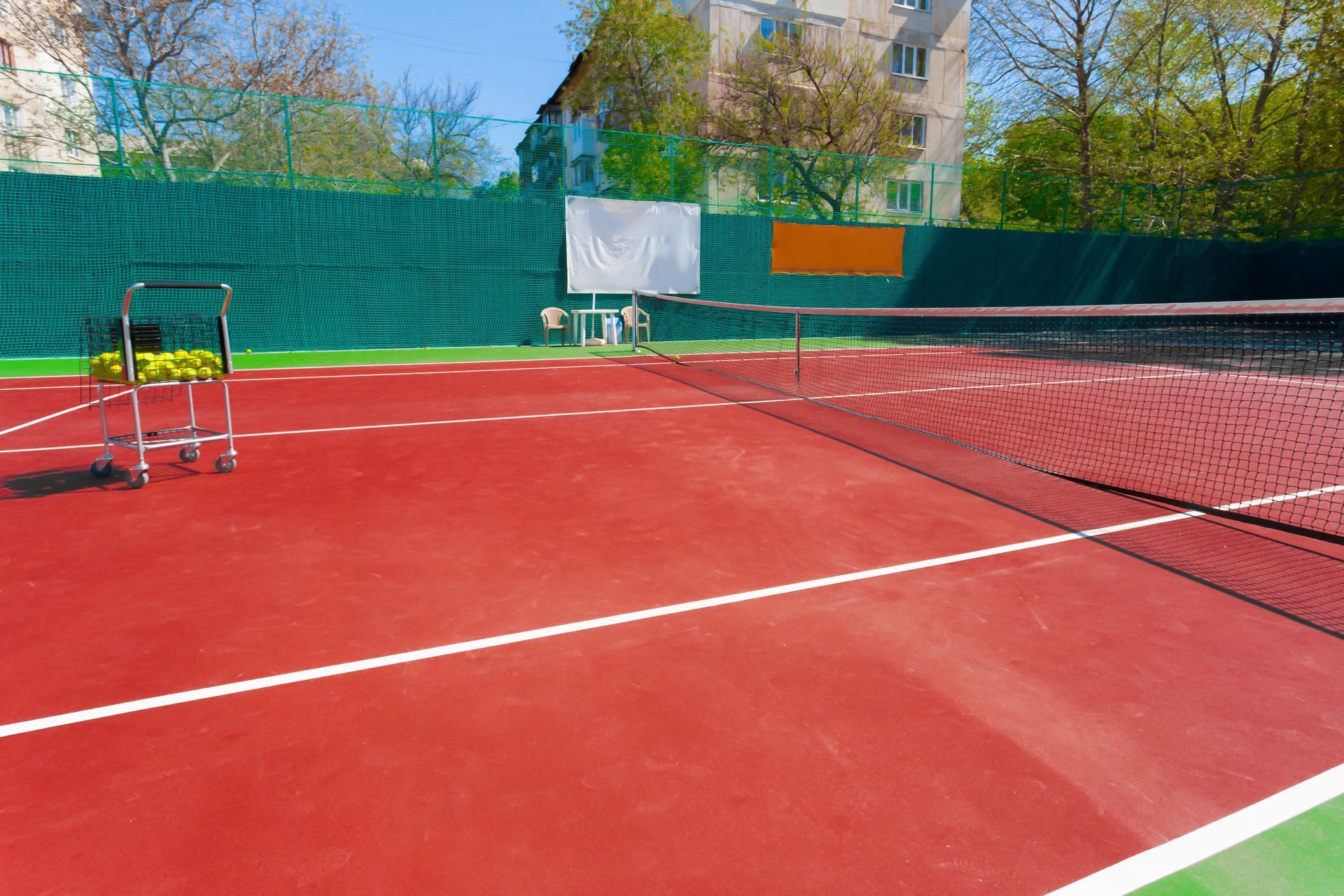
Building public pickleball or tennis courts? ADA pickleball court compliance and ADA tennis court requirements are non-negotiable for parks departments. Mor-Sports Group is a licensed contractor and ASBA member serving Florida, Alabama, and beyond, with deep experience designing ADA-compliant public sports facilities.

Two people discuss a document while another person points with a pen during a meeting
May 15, 2026
Worried about HOA tennis court liability in Florida? This guide covers HOA pickleball insurance in Florida, waivers, posted rules, surface-related injury claims, and how proper court construction reduces risk. Mor-Sports Group is a licensed Florida contractor with 35+ years of experience building safer courts. Contact

Hand holding a pencil over documents beside a laptop on a desk
May 1, 2026
Writing athletic court bid spec for your HOA or condo board? Learn exactly what to include in an HOA sports facility RFP so you get apples-to-apples quotes and avoid change orders. Mor-Sports Group is a licensed Florida contractor and Official Court Builder of the US Open Pickleball Championship.
Aerial view of a green tennis court with blue service boxes and court shadows.
April 14, 2026
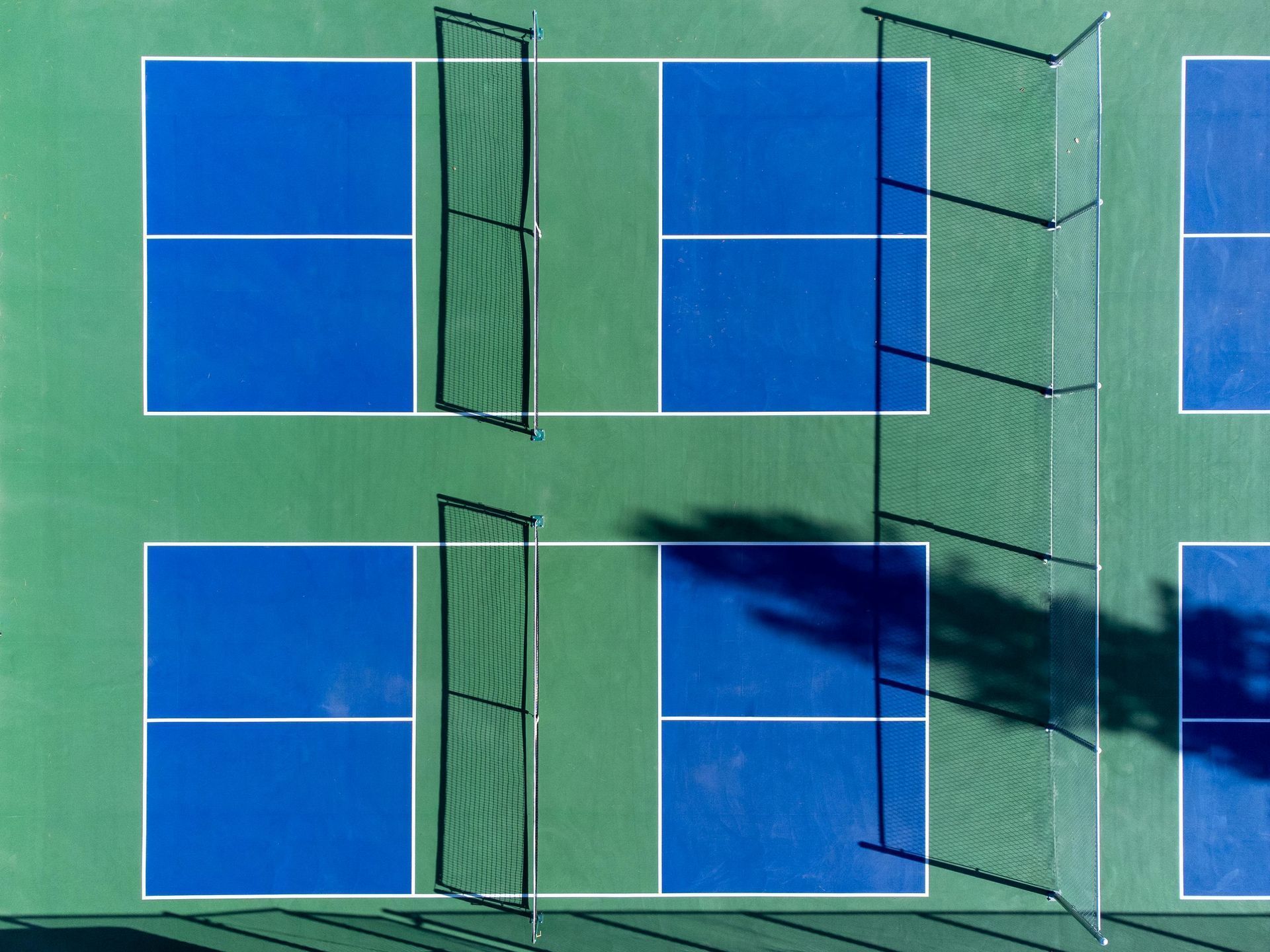
Navigating pickleball court setbacks in Florida? This guide covers Florida condo association pickleball rules, municipal zoning setbacks, buffer requirements, and how Mor-Sports Group designs code-compliant courts for HOAs and condo associations across Florida. Licensed Florida contractor with 35+ years of experience. Contact us today.
Show More