
Florida HOA Pickleball Court Noise Ordinances: What Boards Need to Know Before Building
Pickleball courts are in high demand across Florida HOAs, but noise complaints are stalling projects and sparking lawsuits statewide. Before your board approves construction, you need to understand the science behind pickleball noise, Florida municipal ordinances, and proven sound mitigation strategies that protect your community from costly disputes.
Why Pickleball Is Louder Than Tennis: The Physics
The noise difference between pickleball and tennis isn't subjective. Pickleball generates approximately 70 decibels compared to tennis at 40-45 decibels, making it significantly louder than the sport it's often replacing on community courts.
The physics are straightforward: pickleball uses solid, hard paddles striking plastic perforated balls, while tennis uses strung racquets hitting felt-covered rubber balls. When a pickleball paddle makes contact, it creates a sharp "pop" sound that carries much farther than the softer "thwack" of a tennis racquet. The typical pickleball hit produces sound at approximately 1,000 cycles per second (1 kilohertz), which falls in the midrange of human hearing where we're most sensitive.
During active play, pickleball generates an average of 15 hits per minute, creating 900 "pops" per hour from each court. When you factor in multiple courts, doubles play, and extended playing sessions, the cumulative noise impact becomes substantial. The smaller court size also means players are closer together, amplifying the overall sound level compared to tennis.
How Florida Municipalities Are Regulating Pickleball Noise
Florida cities are scrambling to address pickleball noise through updated ordinances and setback requirements. Naples has seen high-profile disputes, including the Village Walk community lawsuit where residents sued their HOA over $100,000 in unauthorized pickleball court expenses. The noise complaints weren't just about volume, but the character of the sound itself.
Naples' noise ordinance (Chapter 22, Article II) sets specific decibel limits and defines noise disturbances as sounds that violate community peace between 10:00 PM and 7:00 AM. However, most ordinances were written before pickleball's explosion in popularity and don't specifically address the unique acoustic characteristics of the sport.
In Hillsborough County, residents in Apollo Beach filed lawsuits over planned pickleball court conversions, claiming the noise would "ruin everything we signed up for" and comparing the sound to "a pneumatic nail gun on a roof". The county commissioners have directed staff to study pickleball noise litigation nationwide and research appropriate setback distances.
A Boca Raton community's acoustic study found that "current noise emissions are too high, well over the decibel limits stated in the City of Boca Raton's Noise Ordinance". This represents a growing trend of communities conducting formal noise assessments before or after court installation.
Decibel Benchmarks: What's Actually Measured and at What Property Line
For reference, 70 decibels is equivalent to a running dishwasher or vacuum cleaner, while 60-65 decibels matches normal conversation levels. The EPA has long identified 55 decibels as the maximum average outdoor noise level that can be maintained throughout the day without impacting "health and welfare".
Professional acoustic studies show that the 55-decibel threshold for pickleball noise occurs approximately 500 feet away from courts along the length (direction of play) and about 260 feet to the sides. This means court orientation is critical to noise impact on surrounding homes.
Most Florida HOAs measure noise at the nearest property line or building facade. Acoustic experts recommend pickleball courts be placed at least 600 feet from homes, with 300 feet requiring acoustic mitigation, and anything less than 150 feet needing significant abatement or court relocation.
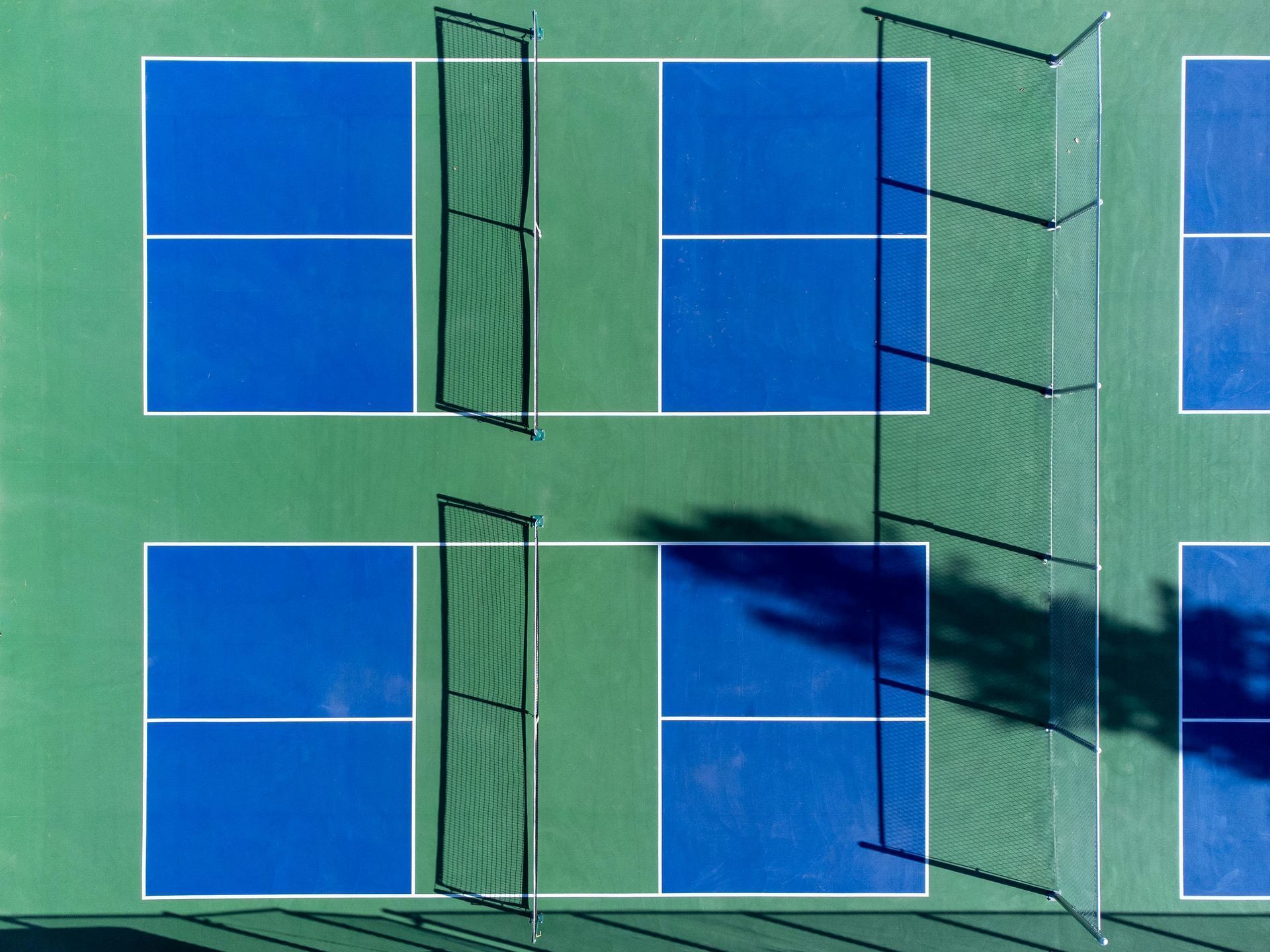
Courts should be oriented perpendicular to prevailing winds and positioned so the "ends" (where most noise travels) don't face residential areas. Flat, rigid surfaces like concrete and asphalt reflect sound and allow it to travel further, while vegetation and varied terrain absorb and baffle noise.
Setbacks, Buffers, and Site Planning Before You Pour a Slab
Site planning determines whether your pickleball project enhances or destroys community harmony. Professional recommendations call for courts to be built at least 500 feet from any bordering residences, where noise decreases to about 58 dBA at 400 feet from the court.
When 500-foot setbacks aren't possible, strategic positioning becomes critical. Place courts perpendicular to prevailing wind patterns to prevent sound from carrying toward homes. The orientation matters significantly because more noise travels from the ends of pickleball courts compared to the sides.
Natural and artificial buffers create substantial noise reduction. Dense tree plantings, earth berms, and existing structures can serve as sound barriers if positioned correctly. However, sparse landscaping or symbolic "green screens" provide minimal acoustic benefit.
Consider existing community infrastructure when selecting sites. Courts positioned near pool equipment, HVAC units, or high-traffic areas benefit from ambient noise masking. Conversely, placing courts adjacent to quiet zones like meditation gardens or library spaces amplifies resident complaints.
Sound Mitigation Options: Acoustic Fencing, Barrier Walls, Landscape Buffers
Multiple proven sound mitigation technologies can reduce pickleball noise to acceptable levels without compromising play quality. The most effective solutions target the specific frequency range where pickleball noise occurs.
Acoustifence, tested by USA Pickleball Association president Bill Booth, reduces noise by 10-12 decibels, representing a 50% reduction in perceived sound. The material is UV and mold resistant, specifically designed for outdoor use, and installs easily on existing chain link fencing.
Advanced solutions like SoundBlock provide up to 32 dBA sound reduction and are designed specifically for pickleball court applications. PICKLEGLASS, the Official Acoustic Solution of USA Pickleball, delivers approximately 50% noise reduction and has been evaluated through independent environmental noise studies using ISO 9613-2 standards.
Barrier walls constructed with mass-loaded vinyl, concrete, or specially designed acoustic panels provide more substantial noise reduction but require greater investment and may affect sight lines. The key is selecting materials that vibrate with sound waves, transforming acoustic energy into mechanical movement and creating inaudible internal friction.
Landscape buffers work best when combined with engineered solutions. Dense, year-round vegetation creates multiple layers of sound absorption, but requires sufficient depth to be effective. A 10-foot-wide landscape buffer provides minimal benefit compared to a 50-foot planted zone with varied heights and densities.
What HOA Boards Should Put in the Bid Spec
A comprehensive bid specification prevents cost overruns and ensures contractors address noise concerns upfront. Include specific acoustic performance requirements, not just generic "sound mitigation" language.
Require contractors to specify the exact decibel reduction their proposed solution will achieve, measured at the nearest residential property line. Demand third-party acoustic testing or modeling to verify claims, especially for courts within 300 feet of homes.
Specify acoustic fencing or barrier materials by performance rating (STC rating for Sound Transmission Class) rather than generic descriptions. Include installation details for proper mounting, sealing, and integration with existing fencing or structures.
Address surface selection in your specifications. Courts built on concrete or asphalt amplify noise more than specialized court surfaces with sound-dampening properties. Cushioned acrylic systems provide noise reduction compared to hard-court surfaces while maintaining proper playing characteristics.
Require detailed site plans showing court orientation, setbacks from all residential buildings, and proposed mitigation measures. Include provisions for post-installation acoustic testing and remediation if noise levels exceed specified thresholds.
What to Do If Your Existing Courts Are Generating Complaints
If your HOA is already facing pickleball noise complaints, immediate action protects against litigation and maintains community relations. Document current noise levels with professional acoustic measurements before implementing solutions.
Engage affected residents directly rather than dismissing concerns. Communities that ignore noise complaints often face extended legal battles and deteriorating relationships between players and non-players.
Implement interim measures while planning permanent solutions. Restrict playing hours during early morning and evening periods when ambient noise levels are lower. Consider seasonal adjustments during months when residents spend more time outdoors.
Retrofit existing courts with acoustic barriers as the most cost-effective permanent solution. Multiple installations across North America demonstrate successful noise reduction using products specifically designed for pickleball applications. Professional installation ensures proper performance and longevity.
Consider converting some courts back to tennis or other quieter activities if noise issues persist. Courts facing ongoing legal challenges may ultimately require complete conversion or removal to resolve disputes.
Pickleball noise is a solvable challenge, not an insurmountable barrier to community recreation. HOA boards that proactively address acoustic concerns through proper planning, specification, and mitigation create amenities that enhance rather than divide their communities.
Mor-Sports Group brings 35+ years of experience building courts that balance recreation with community harmony. As the Official Court Builder of the US Open Pickleball Championship and a proud member of the American Sports Builders Association, we understand the complexities of pickleball acoustics and municipal compliance.
Our Florida Certified Building Contractor license (CBC1263668) and extensive experience with sound-mitigated installations across Florida ensure your project meets both playing standards and community expectations. If your board is evaluating a court project, Mor-Sports Group provides compliant bid specs and fixed-price proposals for HOAs and condo associations across Florida. Request a consultation to discuss noise mitigation strategies for your community.