

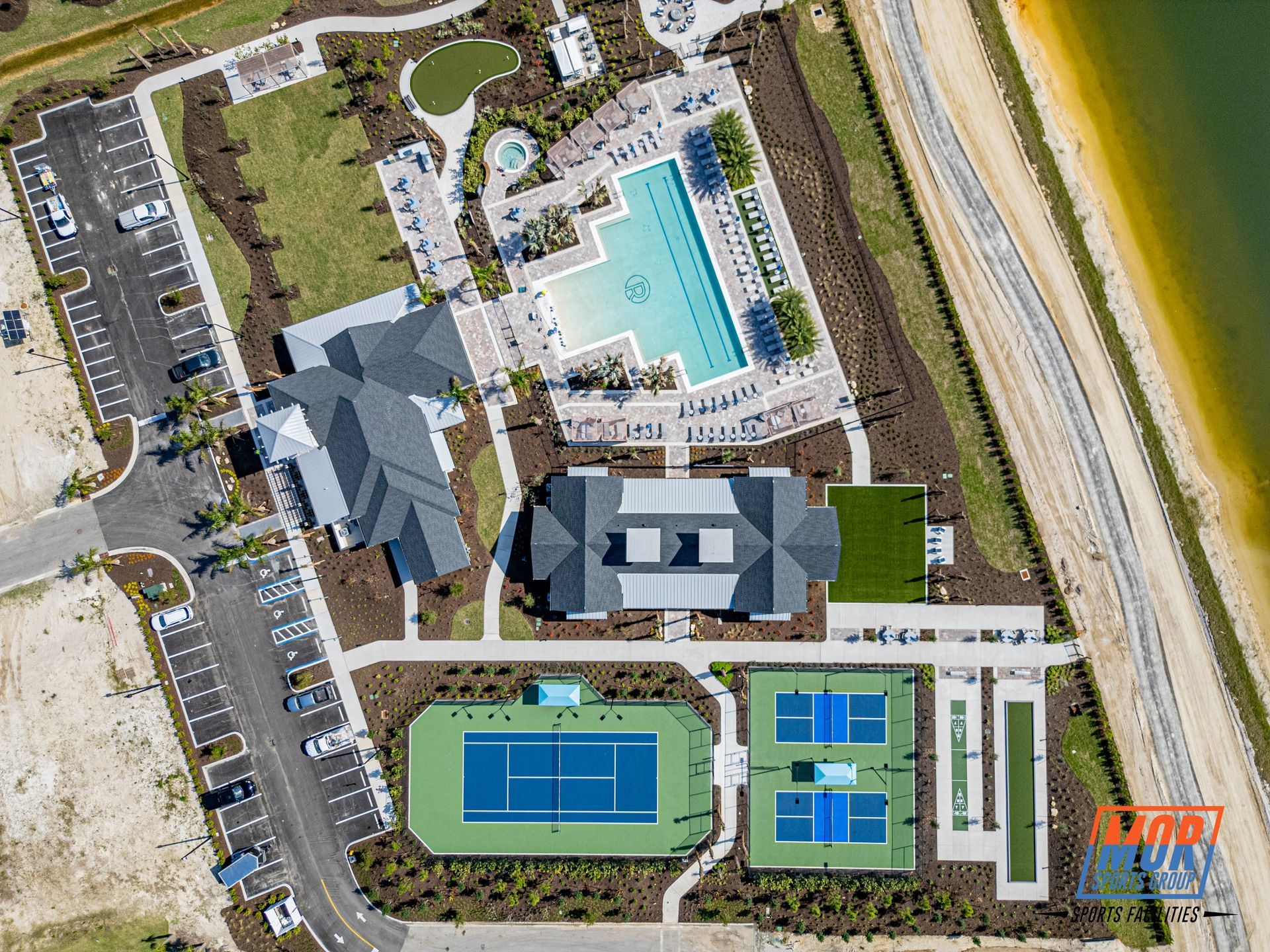
HOA Approval for a Backyard Tennis Court in Florida

Mor-Sports Group • October 30, 2026

Share this article

To get HOA approval for a backyard tennis or pickleball court in Florida, you submit a complete package to your association's architectural review committee (ARC) before any work starts: a site plan with setbacks, the fence design and height, any lighting, the court colors, and a plan for noise and drainage. The ARC can only judge your court against the standards in your declaration and the guidelines it authorizes, and if it says no, Florida law requires it to tell you in writing exactly why. A clean, complete package is the fastest way to a yes on the first pass.

What Florida Law Says About Architectural Review

The key statute for homeowners' associations is section 720.3035, Florida Statutes, which covers architectural control covenants. A few points from the current text matter most for a backyard court.

  • The ARC's power comes from your documents. The association can review the location, size, type or appearance of an improvement only to the extent the declaration, or published guidelines the declaration authorizes, states or reasonably implies that power. It also has to apply those standards reasonably and equally to every owner.
  • You can pick from the listed options. If the guidelines give a menu of materials, sizes, designs or locations, the ARC can't stop you from choosing one of them.
  • Setbacks default to local code. If your documents don't set specific setbacks, the county or city setbacks apply, and the association can't enforce a setback that conflicts with them. Unless your documents say otherwise, a lot has only one front for setback purposes, even a corner lot.
  • Denials must be specific. Since the 2024 amendments in HB 1203 (Chapter 2024-221) , a denial must be in writing and must name the rule or covenant relied on and the specific part of your plan that doesn't conform.
  • No permit needed before review. As of July 1, 2026, Chapter 2026-63 (HB 803) added paragraph (1)(c), which says the association can't require you to have an issued building permit before it will review your plans. You still need whatever permit your county or city requires. The ARC can simply condition its approval on you getting it.

There's also section 720.3045, which bars associations from restricting items that aren't visible from the frontage, an adjacent parcel, an adjacent common area or a community golf course. Don't count on it for a court. A fenced court with a windscreen is almost always visible from a neighbor's lot, so plan on full ARC review.

One more useful rule: under section 720.303(2), meetings of any body with power to approve or disapprove architectural decisions for a specific parcel follow the same open meeting rules as board meetings. You can ask when your application will be heard and attend.

Every community's documents are different, so if your plan is unusual or you get pushback, have an attorney who handles community association law read your declaration and guidelines.

Start With Your Own Documents

Before anyone draws a court, pull three things from your association or management company: the recorded declaration of covenants, the current architectural guidelines, and the ARC application form. Read them for:

  • Rules that name recreational courts, accessory structures, fences or outdoor lighting
  • Rear and side setbacks, plus any easements on your plat (drainage and utility easements are common deal breakers)
  • Approved fence materials, colors and maximum heights
  • Lighting limits, such as fixture types, shielding or curfews
  • Required submittal items and how many copies
  • Review timelines and what happens if the ARC doesn't respond

If the guidelines say nothing about courts, that's not a free pass. The ARC still reviews under its general authority over structures and appearance. It just means the decision rests on broader standards like fences, lighting and impervious area.

What to Put in Your ARC Submittal Package

A package that answers every question up front tends to get approved on the first hearing. Here's what we recommend for a backyard court.

1. Site plan drawn on your survey

Use your boundary survey as the base. Show the court footprint, the fenced area, distances to every property line, the house, the pool and any easements. Label the dimensions. A regulation tennis court is 78 feet by 36 feet for doubles per the USTA, and the paved area around it is larger. A pickleball court is 20 feet by 44 feet under the USA Pickleball rulebook, which sets a minimum playing surface of 30 by 60 feet and recommends 34 by 64 feet for new construction. Many backyards fit a pickleball court when a full tennis court won't.

2. Court orientation

USA Pickleball recommends orienting outdoor courts north to south so players aren't staring into a low sun. Note the orientation on the plan.

3. Fence elevation

Include a drawing of the fence with height, material, color, gate locations and any windscreen. Fence height is often the biggest sticking point, so match your guidelines or ask for a variance in writing with a reason, such as keeping balls out of a neighbor's yard.

4. Lighting plan

If you want lights, show pole locations, pole heights, fixture cut sheets and shielding. Explain how light stays on your lot. If you're not adding lights now, say so clearly. Some owners skip lighting in the first application and keep the court simple.

5. Color selections

Attach the acrylic color chips for the court surface and lines. Muted greens and blues usually blend into a backyard better than bright colors. If your guidelines list approved palettes, pick from them.

6. Drainage and grading

A court adds hard surface. Show where water will go so it doesn't flow onto a neighbor's lot. Our builds use a laser graded lime rock sub base set to ASBA grades and slopes, which moves water off the court in a planned direction. Put that on the plan.

7. Noise plan

Pickleball draws the most noise concern. Address it directly: distance to neighboring homes, landscape buffers, windscreens or acoustic panels, and your own play hours. Our guide to Florida HOA pickleball court noise ordinances covers the local rules that may also apply.

8. Contractor information and schedule

List your contractor, their Florida license and insurance, the equipment access route and expected duration.

Tips That Help You Get Approved the First Time

  • Talk to the manager first. Ask what the ARC has flagged on past court or fence requests.
  • Talk to your neighbors. A short visit with the plan in hand heads off objections.
  • Match the guidelines where you can. Every variance is one more thing to debate.
  • Get conditions in writing so your contractor builds to them.

Your contractor should help with the drawings. When we plan tennis court construction for a home, the site plan, grading and fence details we prepare for the permit also serve the ARC package. For smaller lots, a pickleball court is often the easier approval because of the smaller footprint. Our guide to preparing for athletic court construction covers the steps beyond approval.

What Happens After Approval

Once the ARC signs off, your contractor pulls the building permit from your county or city. Keep the approval letter on site. If anything changes during construction, like a fence moving a few feet, go back to the ARC before you build it.

Frequently Asked Questions

Can my Florida HOA ban a backyard tennis court?

That depends on your declaration. Under section 720.3035, the ARC's authority is limited to what the declaration and authorized guidelines state or reasonably imply, and it must apply standards equally to all owners. Some declarations restrict courts outright, so read yours first.

Do I need a building permit before I apply to the ARC?

No. Since July 1, 2026, an association can't require an issued building permit as a condition of reviewing your plans. It can still require you to get any permit the county or city requires before you build.

What if the ARC denies my application?

Florida law requires a written denial that names the specific rule or covenant and the part of your plan that doesn't conform. Use that notice to revise the plan and resubmit.

Is a pickleball court easier to get approved than a tennis court?

Often, yes, because the footprint is much smaller and fits within setbacks more easily. Noise is the main concern with pickleball, so include distance, buffers and play hours in your package.

Can the HOA require stricter setbacks than the county?

Only if the declaration or authorized guidelines set specific setbacks. If they don't, the county or city setbacks apply and the association can't enforce a conflicting one.

Mor-Sports Group has built courts across Florida and Southern Alabama since 1986, with our own crews doing the work. If you're planning a backyard court, we can help you prepare drawings your ARC can approve. Request a free estimate to get started.

Recent Posts

Pickleball courts at Regency at Babcock Ranch
By Mor-Sports Group • October 28, 2026
Plan pickleball courts for a Florida 55+ community: court count, shade, cushion, lighting, ADA access. From an ASBA award-winning builder. Free estimate.
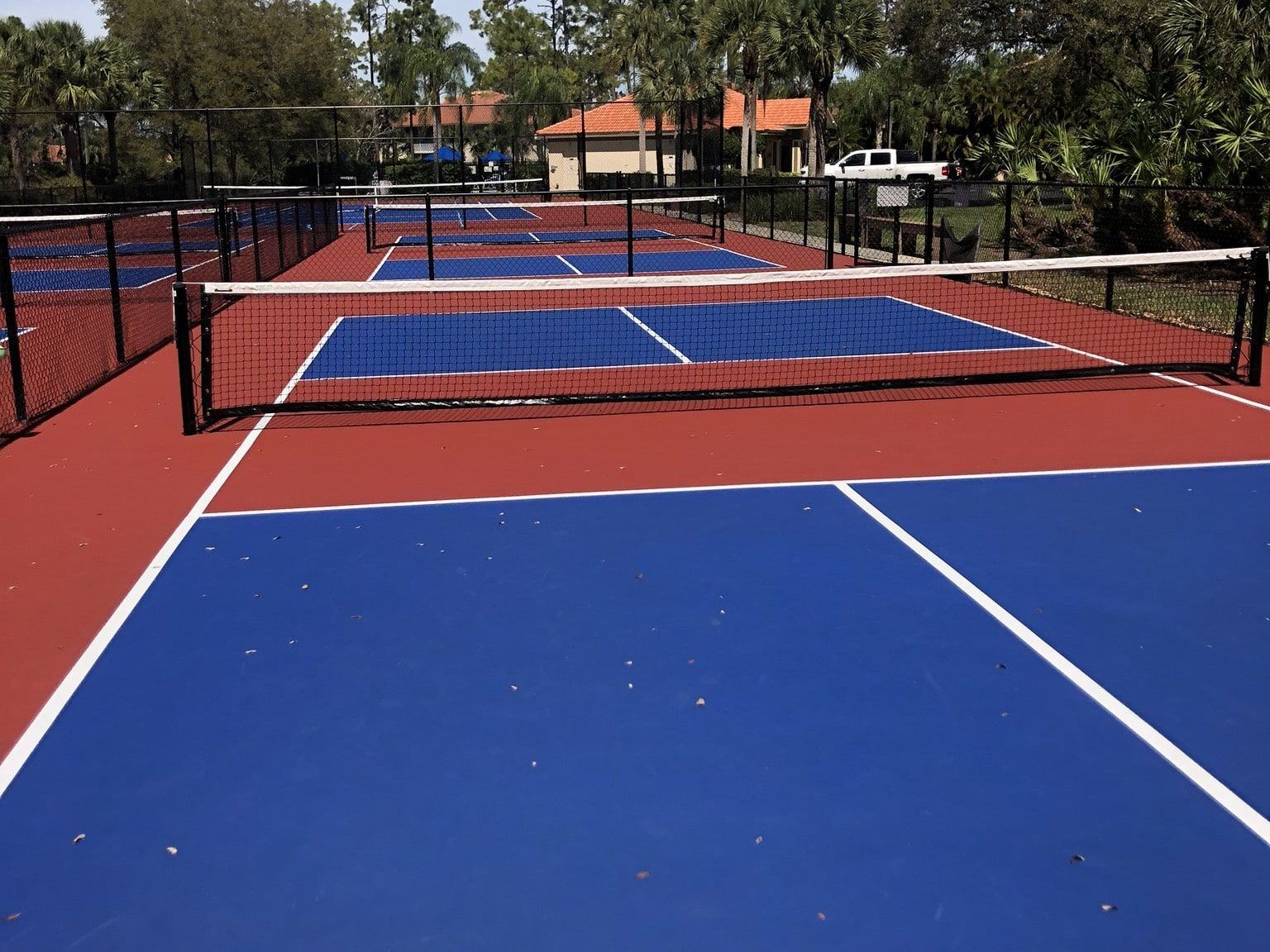
Completed pickleball courts built by Mor-Sports Group
By Mor-Sports Group • October 26, 2026
How Florida HOAs convert tennis courts to pickleball: blended lines, 4-court layouts, board votes, noise. Court builder since 1986. Free estimate.

Court project plans on a table
By Mor-Sports Group • October 23, 2026
Which Florida county office issues tennis and pickleball court permits, and what each one checks. From a court builder since 1986. Get a free estimate.
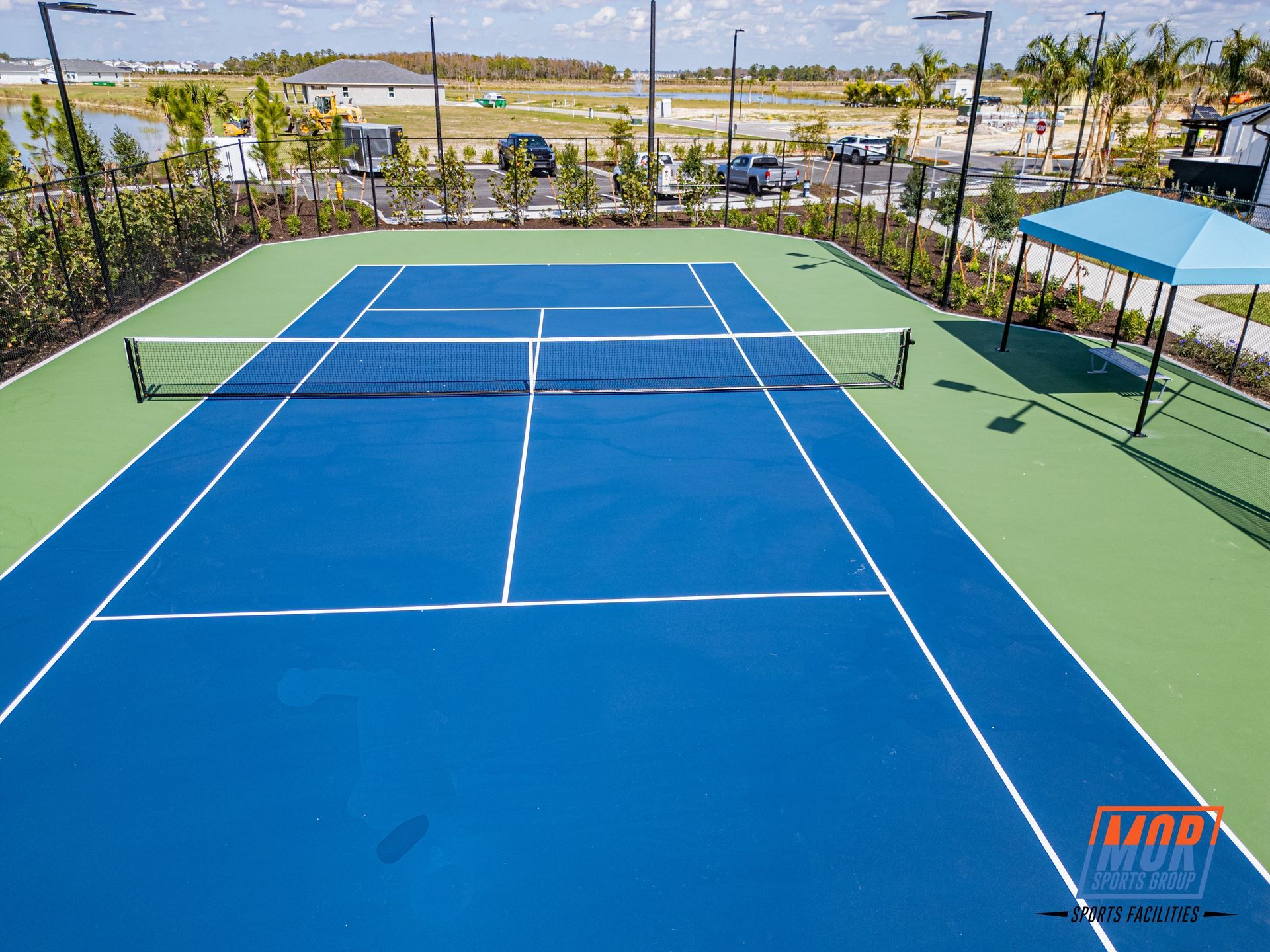
Empty blue tennis court with green sidelines, net, and a beachside resort in the background
By Mor-Sports Group • September 3, 2026
Mor-Sports Group won a 2026 ASBA Facility Award in the Tennis and Pickleball Facility category for the courts we built at Regency at Babcock Ranch in Punta Gorda, Florida. Here is how the project was built.
Podcast interview graphic with two speakers and bold text: “The Standard for Sports Construction”
By Mor-Sports Group • September 2, 2026
Nick Blackwood and Leslie LoGelfo joined the Move Swiftly podcast to talk self-performed court construction, the rise of padel, cushion surfaces and what communities should ask before they build.
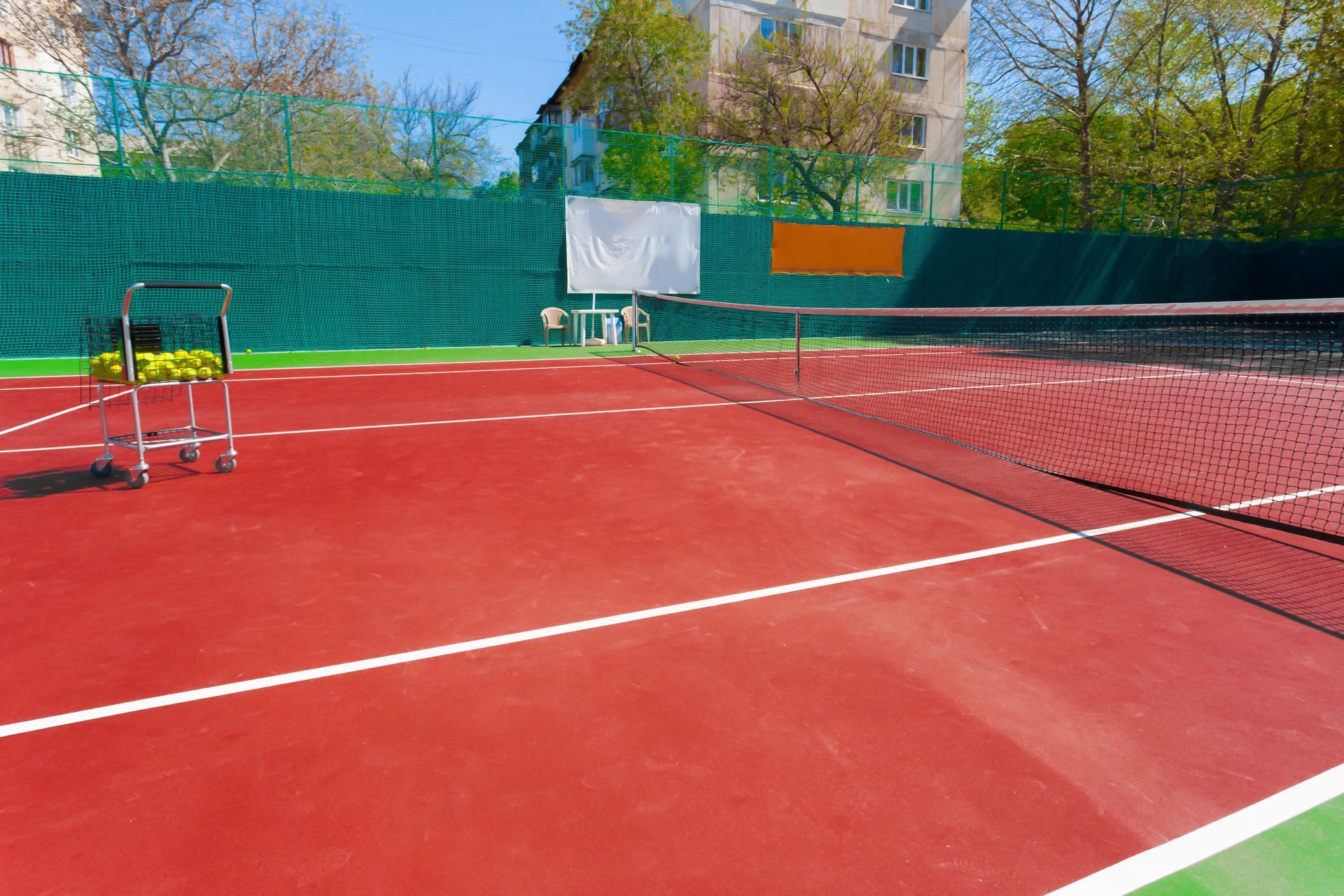
Empty red tennis court with net, ball cart, and green fence under a clear blue sky
May 29, 2026
Building public pickleball or tennis courts? ADA pickleball court compliance and ADA tennis court requirements are non-negotiable for parks departments. Mor-Sports Group is a licensed contractor and ASBA member serving Florida, Alabama, and beyond, with deep experience designing ADA-compliant public sports facilities.

Two people discuss a document while another person points with a pen during a meeting
May 15, 2026
Worried about HOA tennis court liability in Florida? This guide covers HOA pickleball insurance in Florida, waivers, posted rules, surface-related injury claims, and how proper court construction reduces risk. Mor-Sports Group is a licensed Florida contractor with 35+ years of experience building safer courts. Contact

Hand holding a pencil over documents beside a laptop on a desk
May 1, 2026
Writing athletic court bid spec for your HOA or condo board? Learn exactly what to include in an HOA sports facility RFP so you get apples-to-apples quotes and avoid change orders. Mor-Sports Group is a licensed Florida contractor and Official Court Builder of the US Open Pickleball Championship.
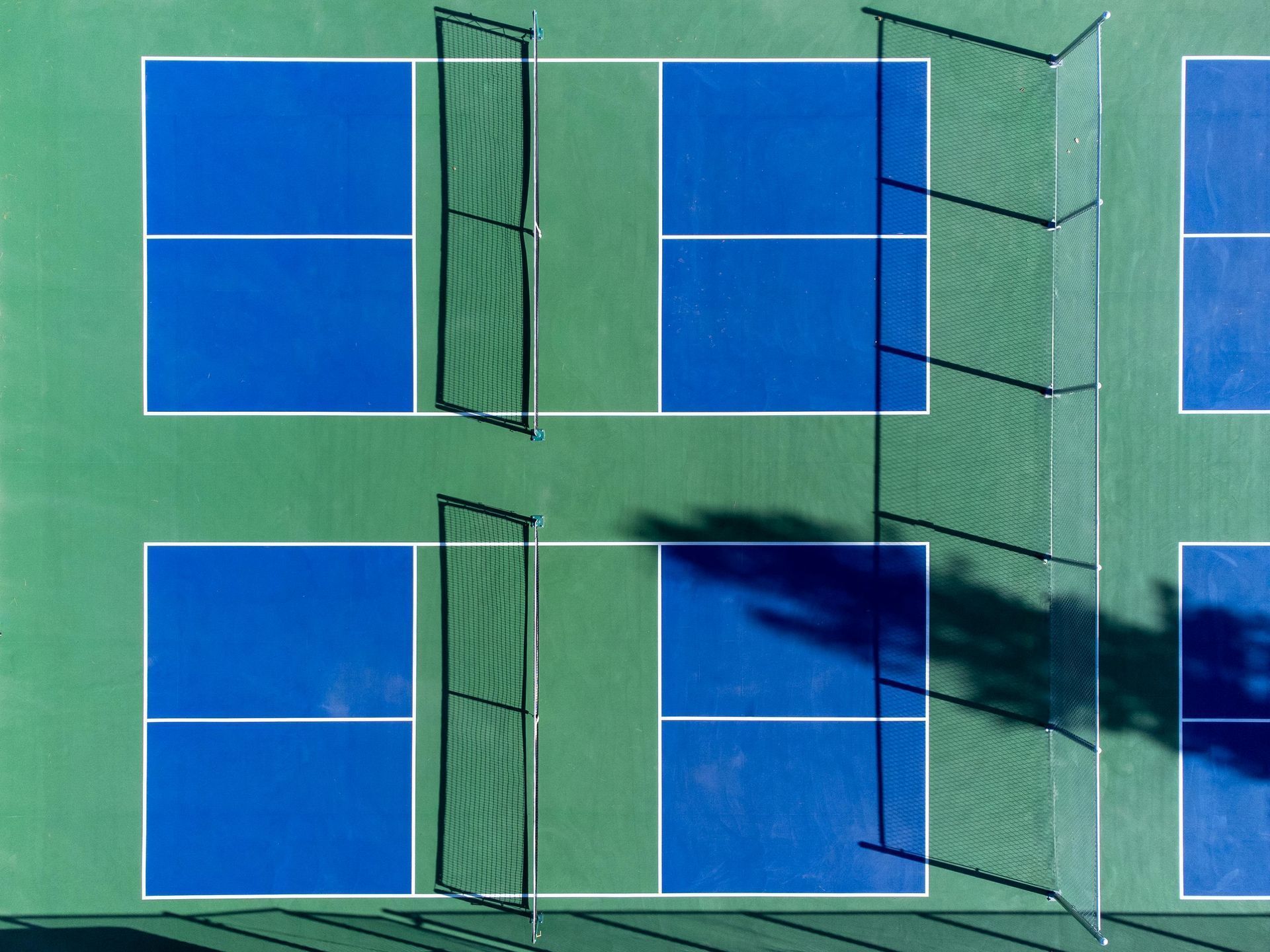
Aerial view of a green tennis court with blue service boxes and court shadows.
April 14, 2026
Navigating pickleball court setbacks in Florida? This guide covers Florida condo association pickleball rules, municipal zoning setbacks, buffer requirements, and how Mor-Sports Group designs code-compliant courts for HOAs and condo associations across Florida. Licensed Florida contractor with 35+ years of experience. Contact us today.
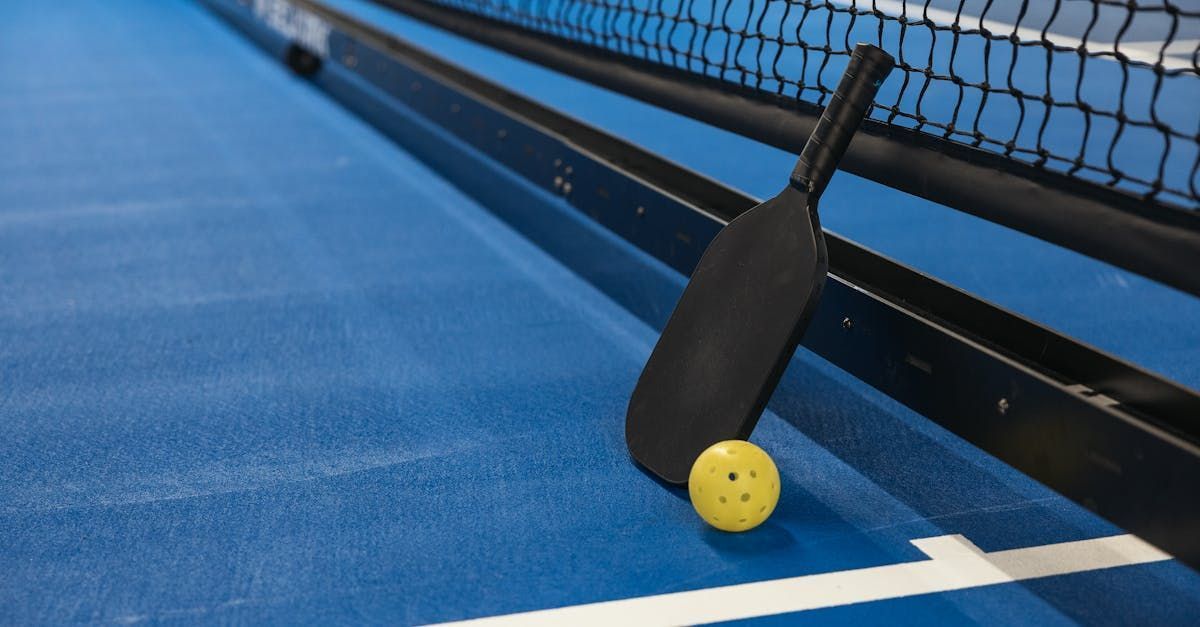
Pickleball paddle and ball on a blue court near the net
April 14, 2026
Planning a pickleball court for your Florida HOA? Learn how pickleball court noise Florida HOA rules work, what local noise ordinances allow, and how Mor-Sports Group designs sound-mitigated courts that keep your community and neighbors happy. Licensed Florida contractor, Official Court Builder of the US Open Pickleball Championship. Request a quote today.
Show More