

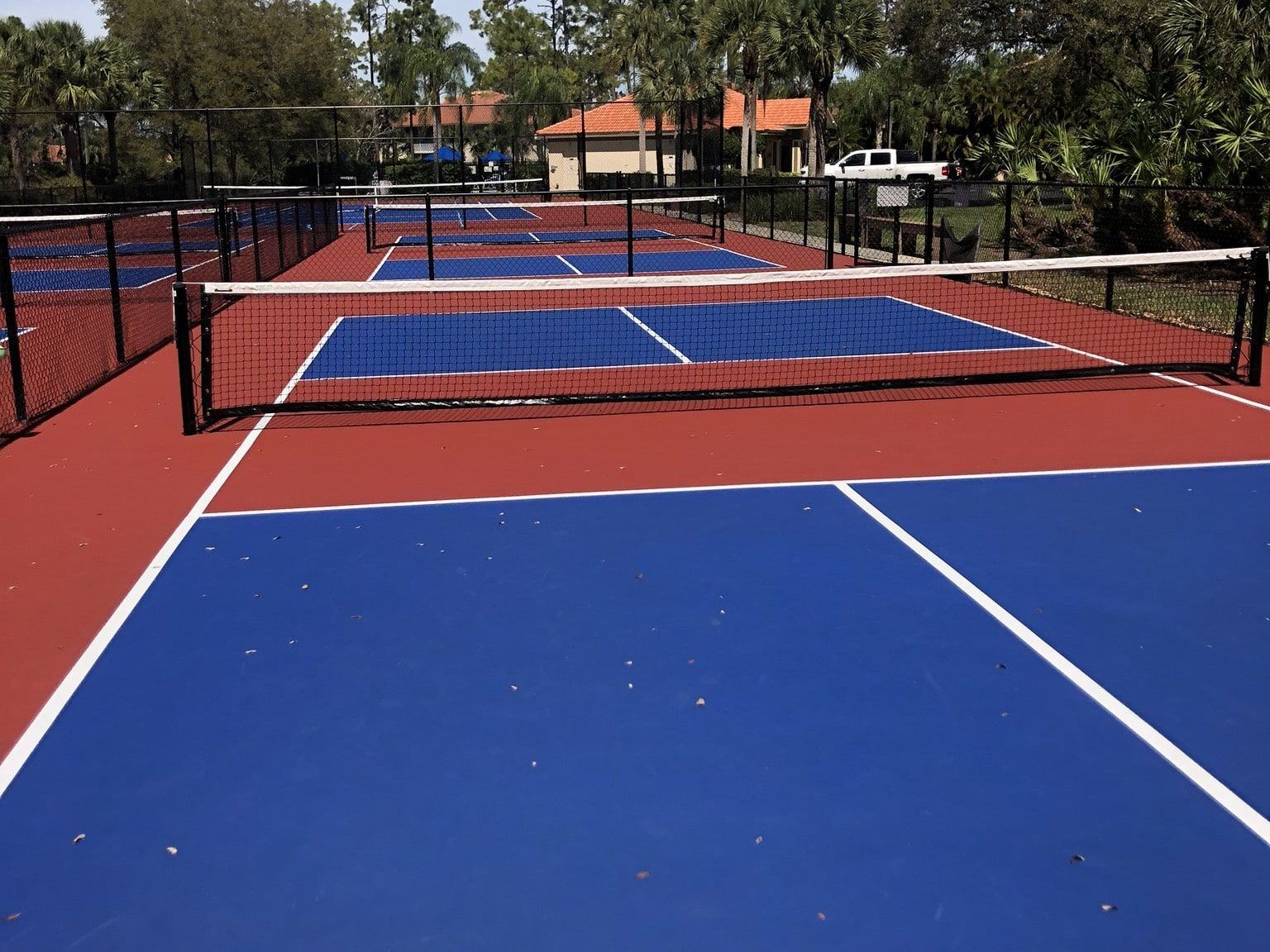
Planning Pickleball Courts for a 55+ Community in Florida

Mor-Sports Group • October 28, 2026

Share this article

Good pickleball courts for a Florida 55+ community start with enough courts for your busiest morning, then add shade, a cushioned surface, glare-free lighting and an accessible path from the parking lot to both sides of every court. Get those right and residents will use the courts for years. Get them wrong and you'll hear about it at every board meeting.

This guide walks a board, amenity committee or developer through each decision, in the order we'd tackle it.

Start With Demand, Not the Site Plan

Pickleball is still growing fast. The Sports and Fitness Industry Association's 2026 Pickleball Single Sport Report found 24.3 million Americans played in 2025, up from 4.2 million in 2020. SFIA's "core" players, those who play eight or more times a year, grew from 1.4 million to 7.5 million over the same period. In an active adult community, many of your players will be core players who show up several mornings a week.

We couldn't find a published national standard for courts per resident, and we'd be wary of anyone who quotes one as a rule. A better approach is to count your own peak demand:

  1. Survey residents. Ask who plays now, who would play with better courts, and what time of day they play.
  2. Find the peak hour. In Florida that's often early morning, before the heat. Estimate how many players want a court in that window.
  3. Divide by four. Doubles is the norm. An ASBA technical presentation on pickleball design considerations notes typical play is four players per court. Then add room for players waiting their turn.
  4. Plan for growth. Leave space on the site plan for more courts, even if you don't build them yet.

Size Each Court Correctly

The 2026 USA Pickleball Official Rulebook(Rule 3.A) sets the court at 20 by 44 feet. The minimum playing surface, including run-off, is 30 by 60 feet. For new construction, the rulebook recommends 34 by 64 feet. For older players, that extra run-off space matters. It gives room to stop safely instead of running into a fence or the next court.

USA Pickleball also recommends orienting outdoor courts north to south so players aren't looking straight into the sun in the morning or late afternoon. Our pickleball court construction team plans orientation, run-off and drainage together, because changing any one of them affects the others.

Shade and Heat: Plan for Florida Mornings and Afternoons

Heat is a real health issue for this group. The CDC says adults 65 and older adjust more slowly to sudden temperature changes, and that chronic conditions and some prescription medicines can affect how the body handles heat. The CDC also notes UV rays are strongest from 10 a.m. to 4 p.m. daylight saving time in the continental U.S.

What that means for your design:

  • Shade the waiting areas first. Players spend a lot of time sitting between games. Shade structures over benches give the most comfort for the money.
  • Add water. A drinking fountain or bottle filler near the courts makes hydration easy.
  • Choose lighter colors. USA Pickleball notes lighter surface colors absorb less heat and keep the court cooler.
  • Light the courts. Lights let residents play in the cooler evening hours instead of midday.

Cushioned Surfaces Are Worth a Close Look

A cushion surfacing system adds resilient layers under the acrylic color coats. The goal is better shock absorption and less strain on joints, which is why it's popular with active adult communities.

A few things drive the decision and the cost:

  • The number of cushion layers in the system.
  • New build or retrofit. Adding cushion to an existing court may mean repairing the surface first.
  • How you'll budget future resurfacing, since cushion systems are part of the court's long-term maintenance plan.

Ask bidders to name the exact system and number of layers so you can compare proposals fairly.

Lighting That Works for Older Eyes

USA Pickleball recommends high-quality lighting that avoids shadows and glare. That's important for older players, who need clear contrast to track a fast ball. Ask for a photometric plan that shows even light across every court, and choose fixtures that keep light out of players' eyes and off neighboring homes. Our guide to lighting outdoor pickleball courts covers light levels, uniformity and pole placement in more detail. If your community is near a nesting beach, check your local sea turtle lighting ordinance before you choose fixtures.

ADA Access: Both Sides of Every Court

The 2010 ADA Standards include specific rules for courts:

  • Section 206.2.2 requires an accessible route within a site, and its advisory note says each court or area of sport activity needs one.
  • Section 206.2.12 says that for court sports, at least one accessible route must directly connect both sides of the court.
  • Section 403.3 limits running slope to 1:20 and cross slope to 1:48 on walking surfaces.
  • Section 403.5.1 sets a 36-inch minimum clear width for walking surfaces.
  • Section 404.2.3 requires at least 32 inches of clear width at door openings, which matters at court gates.

The Florida Building Code, Accessibility carries the same court sports language in its Section 206.2.12. Whether federal ADA rules apply to a private, residents-only amenity is a legal question, so confirm with your association attorney and the local permitting office. Even where it isn't required, building to these standards makes sense in a community where some residents use walkers, canes or wheelchairs, and where spectators want to watch. Our ADA checklist for public courts goes deeper on gates and routes.

Noise and Neighbors

Pickleball is loud, and 55+ communities often put amenities close to homes. Placement, distance and screening are much easier to solve at the design stage than after residents complain. Read our guide to Florida HOA pickleball noise ordinances and our pickleball setbacks compliance guide before you lock in a location.

Phase the Project if the Budget Calls for It

Many communities can't build everything at once. A phased plan can still give you a great result:

  1. Phase 1: Grade and drain the full site, build the first group of courts, and run the accessible route.
  2. Phase 2: Add shade structures, seating and lights.
  3. Phase 3: Add courts as play grows, on space you reserved in Phase 1.

Running conduit for future lights during Phase 1 avoids cutting into new courts later. Grading the full footprint up front also helps the later courts drain the same way as the first ones.

An Example: Regency at Babcock Ranch

Mor-Sports Group built the courts at Regency at Babcock Ranch, which won a 2026 ASBA Distinguished Facility Award in the Tennis and Pickleball Facility category. The amenity includes tennis, bocce, shuffleboard and pickleball, so residents with different interests share one space.

Our crews self-performed each step: survey and land clearing, a laser-graded lime rock sub base built to ASBA grades and slopes, a laser-paved hot asphalt base, then the cushion system, acrylic color system and lines. That base work is what players never see, and it's what decides how well a court drains and plays years later.

Frequently Asked Questions

How many pickleball courts does a 55+ community need?

There's no official ratio. Survey residents, estimate how many want to play during your busiest hour, divide by four players per court, and add room for waiting players and future growth.

How much space does one pickleball court need?

The 2026 USA Pickleball rulebook sets a 30 by 60 foot minimum playing surface and recommends 34 by 64 feet for new construction. The court lines themselves are 20 by 44 feet.

Are cushioned courts better for older players?

Cushion systems add shock absorption under the color coats, which reduces strain on joints. Many active adult communities choose them for that reason. Compare the number of cushion layers in each bid.

Do private community courts need to meet ADA rules?

It depends on how the courts are used and who can access them. Confirm with your association attorney and local permitting office. Building an accessible route to both sides of each court is a smart choice either way.

Can we convert our tennis courts instead of building new ones?

Often, yes. A tennis court can hold pickleball courts, and resurfacing at the same time is a good chance to add cushion. Check run-off space and noise before you decide.

Ready to plan courts your residents will use every morning? Mor-Sports Group has built courts across Florida and Southern Alabama since 1986, and our own crews do the work from base to lines. Request a free estimate to get started.

Recent Posts

Completed pickleball courts built by Mor-Sports Group
By Mor-Sports Group • October 26, 2026
How Florida HOAs convert tennis courts to pickleball: blended lines, 4-court layouts, board votes, noise. Court builder since 1986. Free estimate.

Court project plans on a table
By Mor-Sports Group • October 23, 2026
Which Florida county office issues tennis and pickleball court permits, and what each one checks. From a court builder since 1986. Get a free estimate.
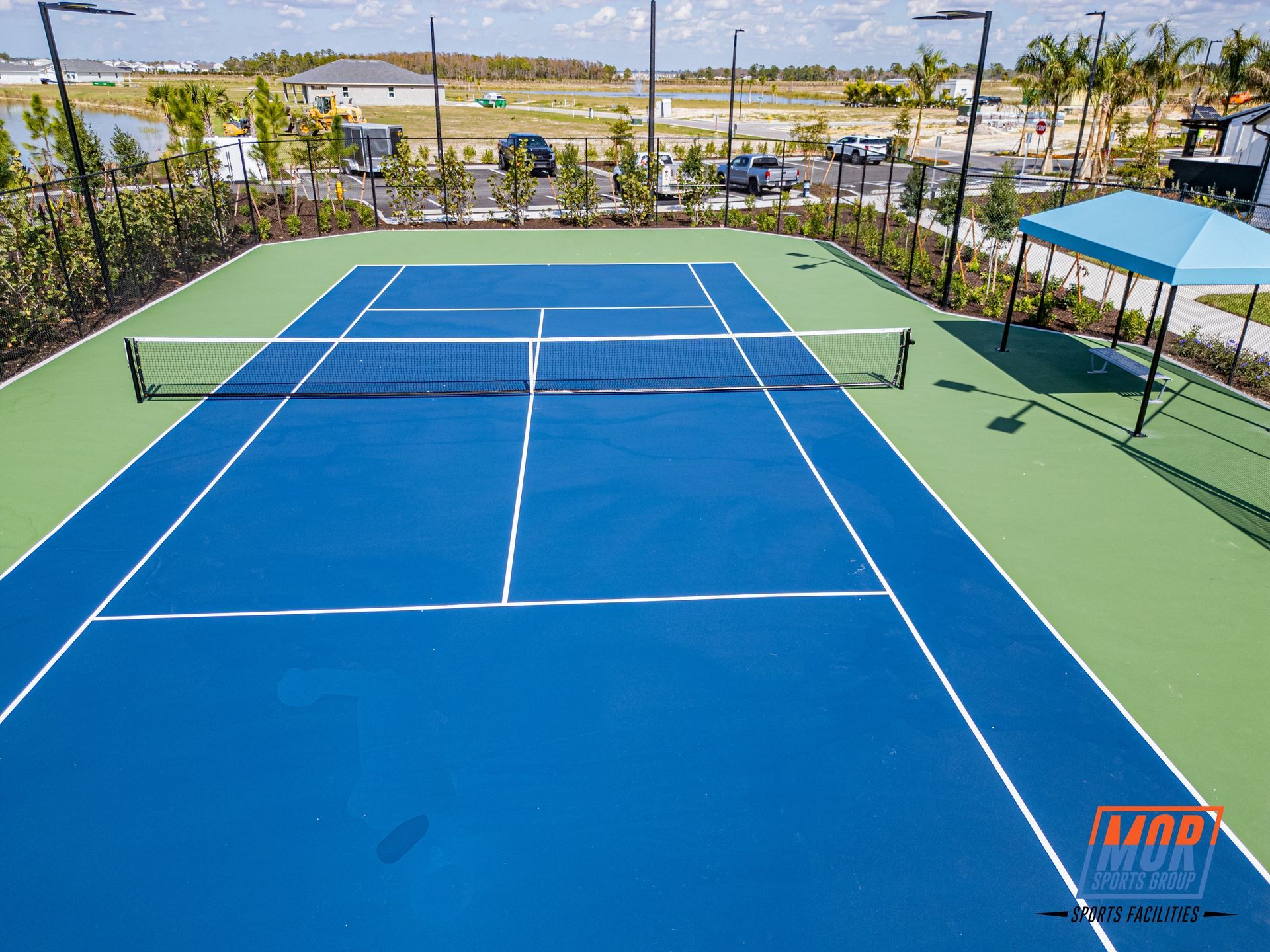
Empty blue tennis court with green sidelines, net, and a beachside resort in the background
By Mor-Sports Group • September 3, 2026
Mor-Sports Group won a 2026 ASBA Facility Award in the Tennis and Pickleball Facility category for the courts we built at Regency at Babcock Ranch in Punta Gorda, Florida. Here is how the project was built.
Podcast interview graphic with two speakers and bold text: “The Standard for Sports Construction”
By Mor-Sports Group • September 2, 2026
Nick Blackwood and Leslie LoGelfo joined the Move Swiftly podcast to talk self-performed court construction, the rise of padel, cushion surfaces and what communities should ask before they build.
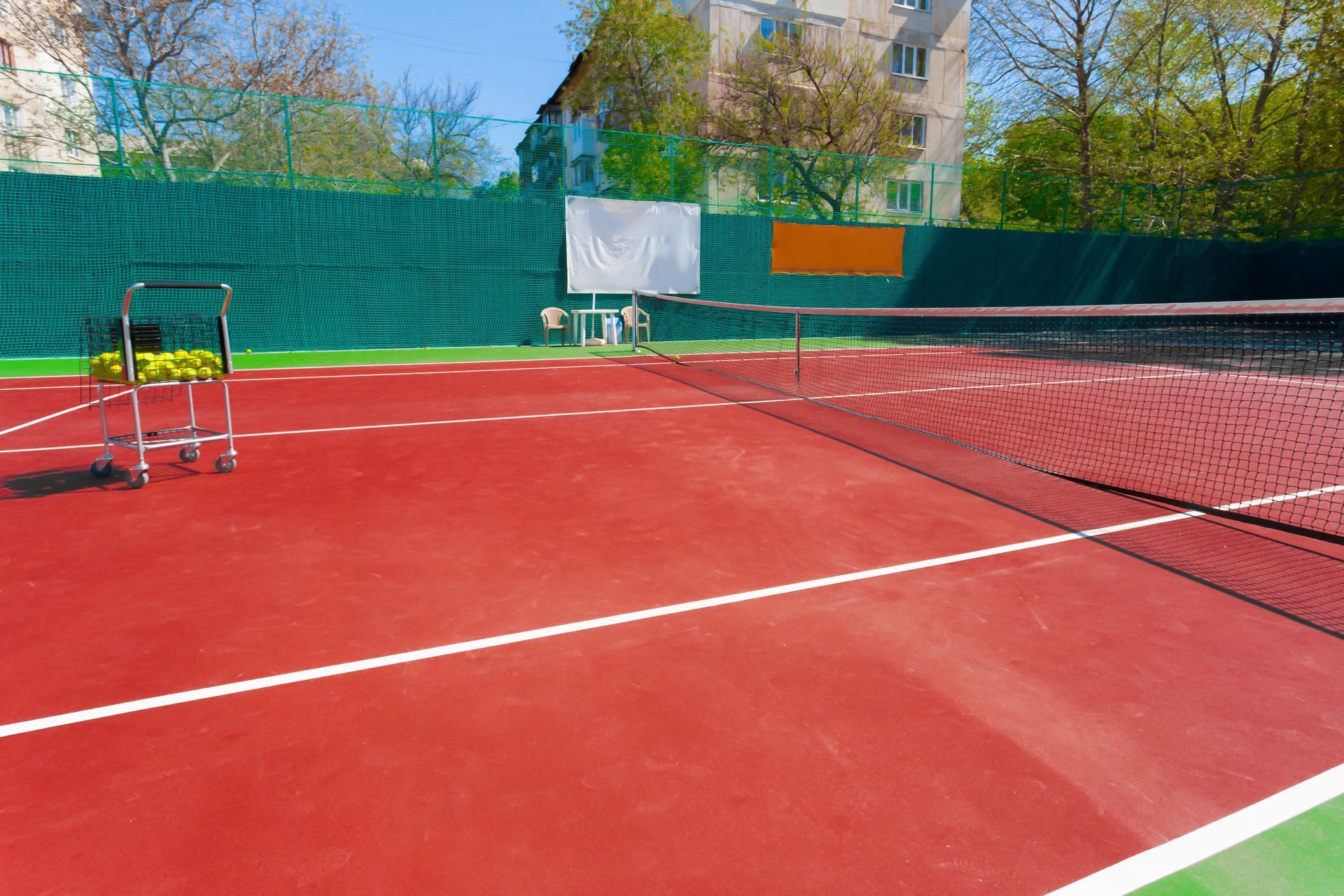
Empty red tennis court with net, ball cart, and green fence under a clear blue sky
May 29, 2026
Building public pickleball or tennis courts? ADA pickleball court compliance and ADA tennis court requirements are non-negotiable for parks departments. Mor-Sports Group is a licensed contractor and ASBA member serving Florida, Alabama, and beyond, with deep experience designing ADA-compliant public sports facilities.

Two people discuss a document while another person points with a pen during a meeting
May 15, 2026
Worried about HOA tennis court liability in Florida? This guide covers HOA pickleball insurance in Florida, waivers, posted rules, surface-related injury claims, and how proper court construction reduces risk. Mor-Sports Group is a licensed Florida contractor with 35+ years of experience building safer courts. Contact

Hand holding a pencil over documents beside a laptop on a desk
May 1, 2026
Writing athletic court bid spec for your HOA or condo board? Learn exactly what to include in an HOA sports facility RFP so you get apples-to-apples quotes and avoid change orders. Mor-Sports Group is a licensed Florida contractor and Official Court Builder of the US Open Pickleball Championship.
Aerial view of a green tennis court with blue service boxes and court shadows.
April 14, 2026
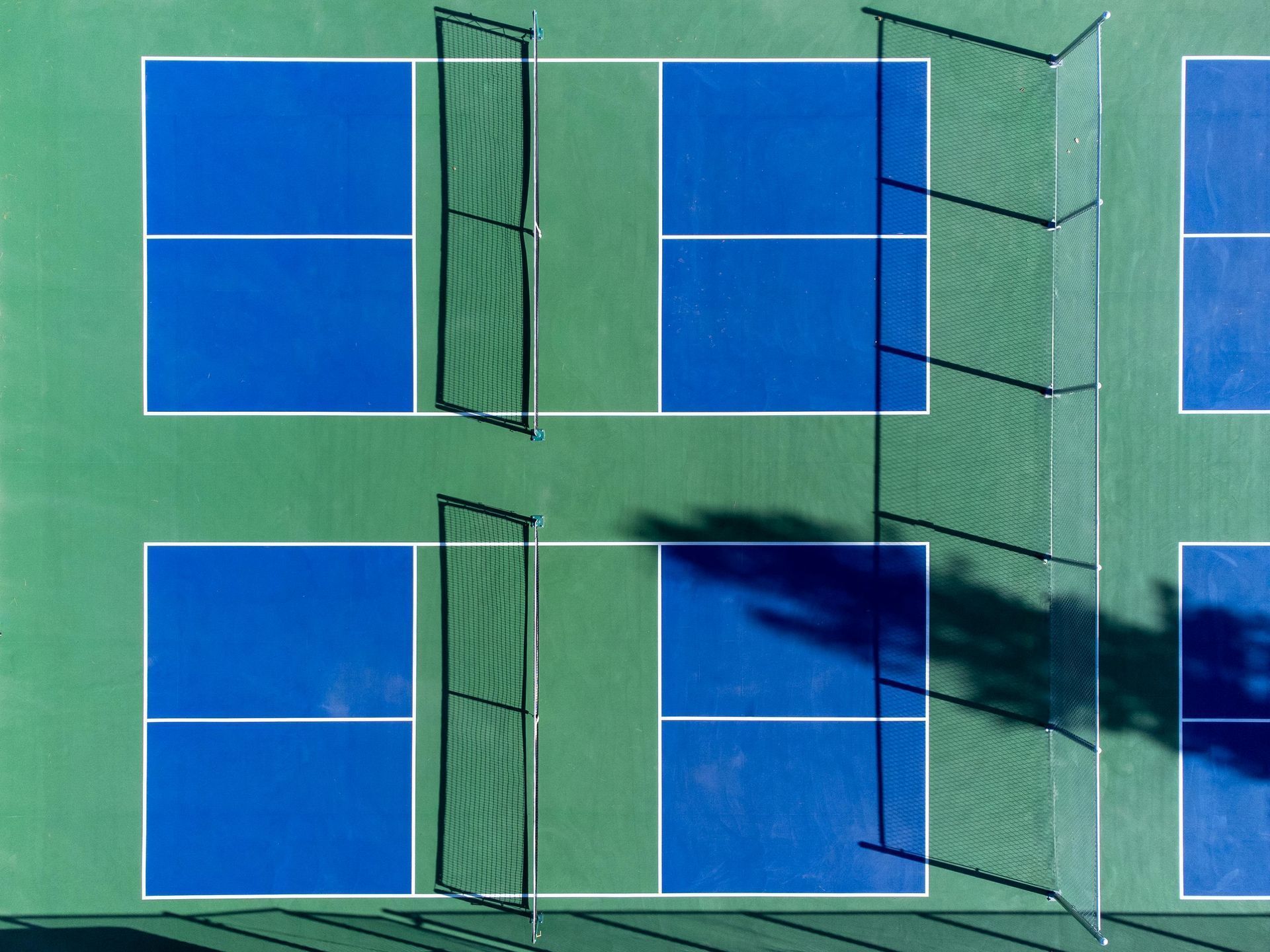
Navigating pickleball court setbacks in Florida? This guide covers Florida condo association pickleball rules, municipal zoning setbacks, buffer requirements, and how Mor-Sports Group designs code-compliant courts for HOAs and condo associations across Florida. Licensed Florida contractor with 35+ years of experience. Contact us today.
Pickleball paddle and ball on a blue court near the net
April 14, 2026
Planning a pickleball court for your Florida HOA? Learn how pickleball court noise Florida HOA rules work, what local noise ordinances allow, and how Mor-Sports Group designs sound-mitigated courts that keep your community and neighbors happy. Licensed Florida contractor, Official Court Builder of the US Open Pickleball Championship. Request a quote today.
Wide view of empty soccer field under a bright blue sky with scattered clouds
March 8, 2026
Maximize synthetic grass field safety with Mor-Sports' best practices. Learn essential guidelines for player injury prevention, field maintenance, and athletic regulations.
Show More