
Country Club Tennis Court Construction in Florida
A successful country club tennis court project in Florida comes down to four decisions made early: who approves what, how to phase the work so members keep playing, what mix of clay and hard courts to build, and how lighting and accessibility fit the plan. Get those settled before the first survey stake goes in and the build itself is the easy part. Get them wrong and you end up with a board fight, a lost season and change orders.
Below is how we'd walk a general manager, tennis director or green and grounds committee through it. For the build steps themselves, see our tennis court construction page.
Approvals: Two Tracks That Run at the Same Time
Inside the club
Clubs approve capital projects through their own bylaws, so the path differs from club to club. Most projects pass through a racquets or tennis committee, then the board, and sometimes a member vote if the spend triggers an assessment. What slows things down is rarely the vote. It's arriving at the vote without answers. Before the board meeting, have:
- A site plan showing court count, orientation, fencing, paths and any light poles.
- A phasing plan that says which courts close when.
- A surface recommendation with the maintenance commitment it carries (clay needs daily grooming staff; hard courts don't).
- A list of what drives cost: base condition, drainage, irrigation type, lighting and how many phases you want.
Outside the club
New courts, new fencing and new lighting need permits from the city or county building department, and site work may also touch stormwater rules. The contractor normally prepares drawings and pulls permits, but the club should know which approvals are in play so the schedule is realistic. Lighting adds an electrical permit and, in some jurisdictions, outdoor lighting rules. In coastal areas it may also bring wildlife lighting rules. Confirm the specifics with your local permitting office before you set a start date.
Phasing So Members Keep Playing
Most clubs can't close every court at once. Phasing is how you keep the tennis program running during construction. A few principles that hold up:
- Work in banks. Close courts in groups that share fencing and drainage, so each phase is a clean, complete unit and you aren't tearing into finished work later.
- Build in the slow season. For many Florida clubs that's summer, when seasonal members are away. Summer also brings afternoon storms, so build weather days into the schedule.
- Keep access open. Plan a separate construction entrance and staging area so equipment never crosses an open court or member path.
- Protect the clay. If clay courts stay open next to an active work zone, plan for dust and debris control and extra grooming.
- Communicate the calendar. Post the phase dates early. Members accept closures they know about. They resent surprises.
Phasing does add mobilizations, which is a cost driver. Fewer, larger phases are usually cheaper per court. More, smaller phases keep more courts open. That trade-off is a board decision, and it helps to show both options side by side.
Getting the Clay and Hard Court Mix Right
Many Florida clubs run both surfaces. Clay is easier on joints and plays slower. Hard courts need less daily care and suit pickleball lines and high-volume play. The right mix depends on your membership, your maintenance staff and how much play happens in summer heat.
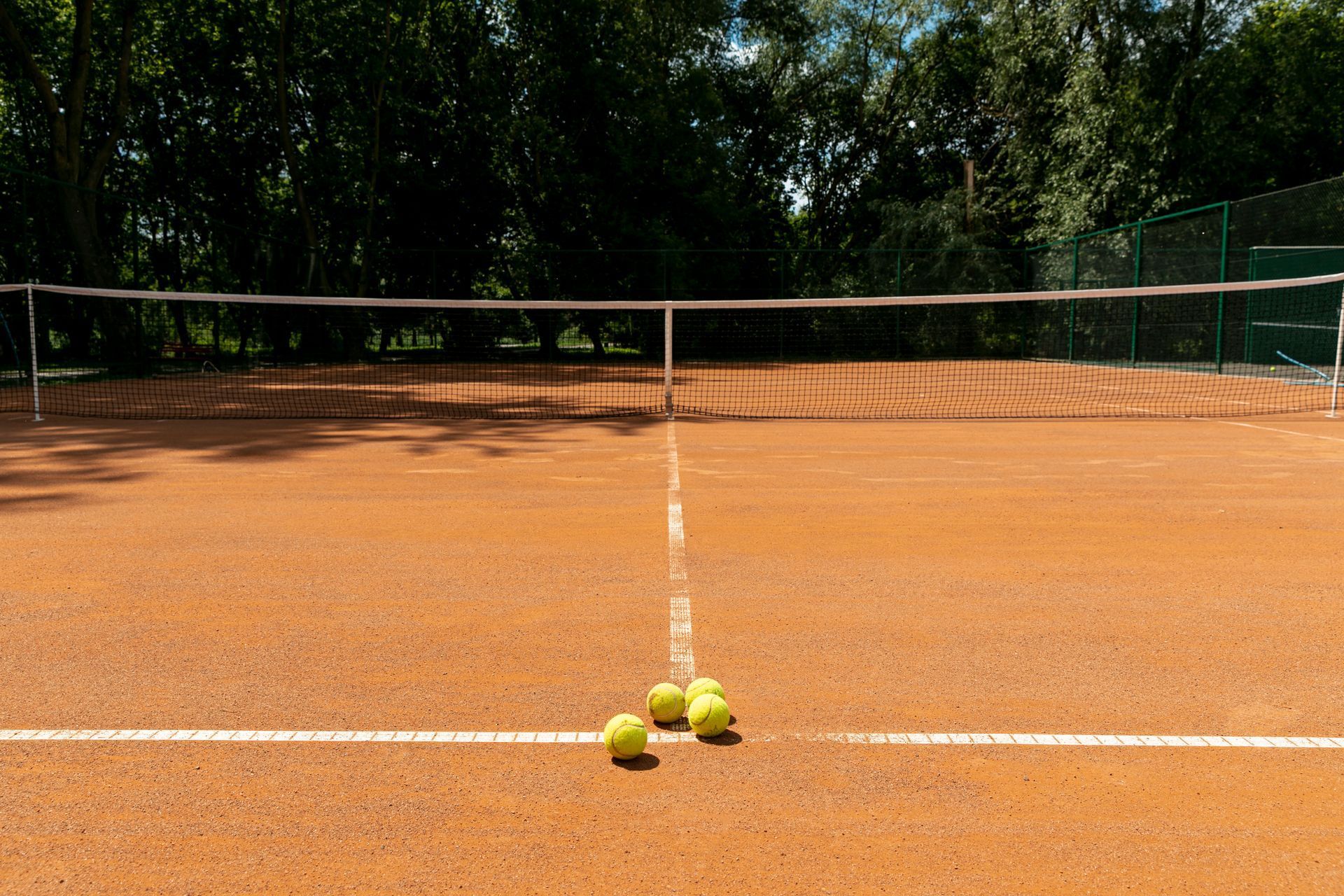
Clay courts
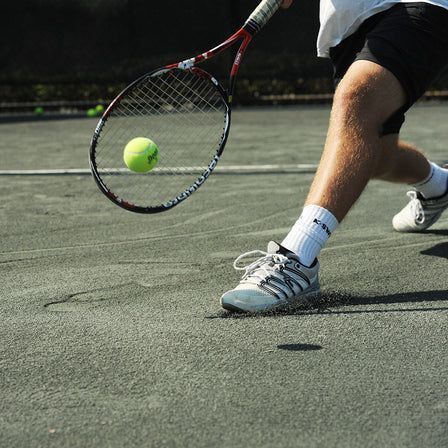
Our clay court construction process covers both sub-irrigated and overhead-irrigated courts. The watering choice is the biggest long-term decision. Har-Tru says the vast majority of new courts are built with subsurface irrigation. Its HydroCourt system uses six individually controlled cells per court, and the manufacturer claims it can use up to 60 percent less water than conventional irrigation. Subsurface systems also mean no sprinkler downtime between matches. Overhead sprinklers cost less to install but interrupt play to water. In either case, check your water management district's watering rules during design.
Hard courts
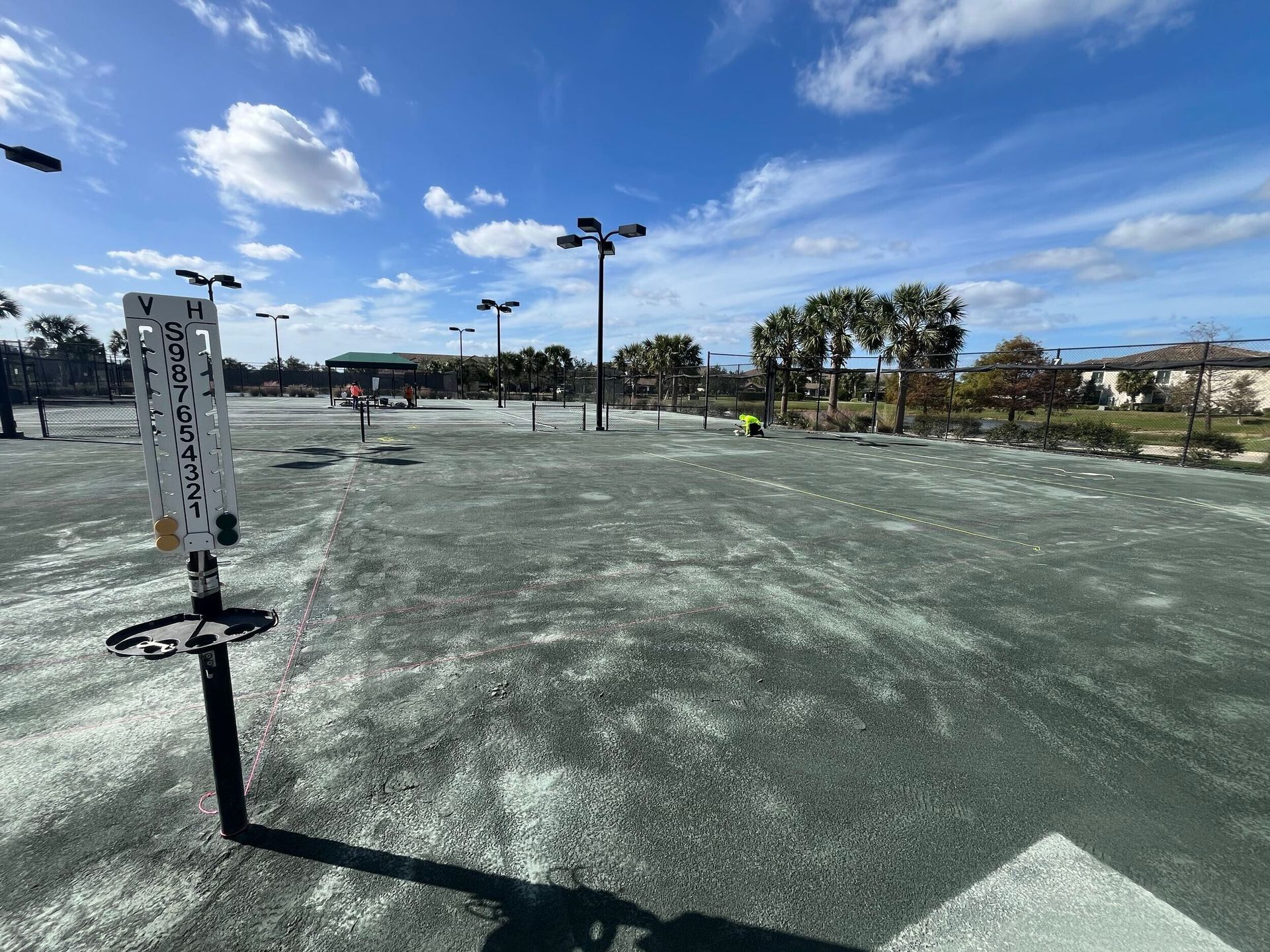
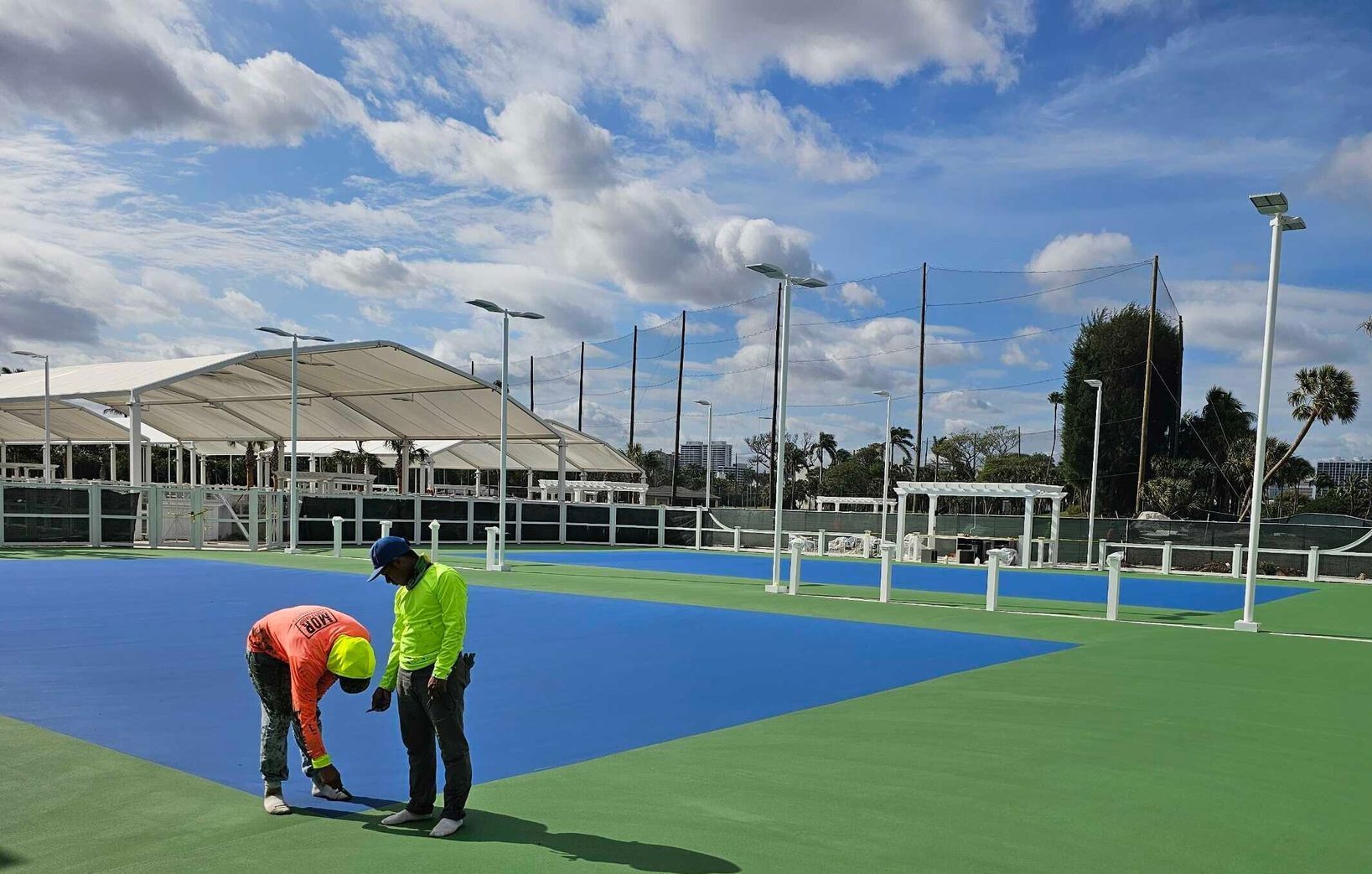
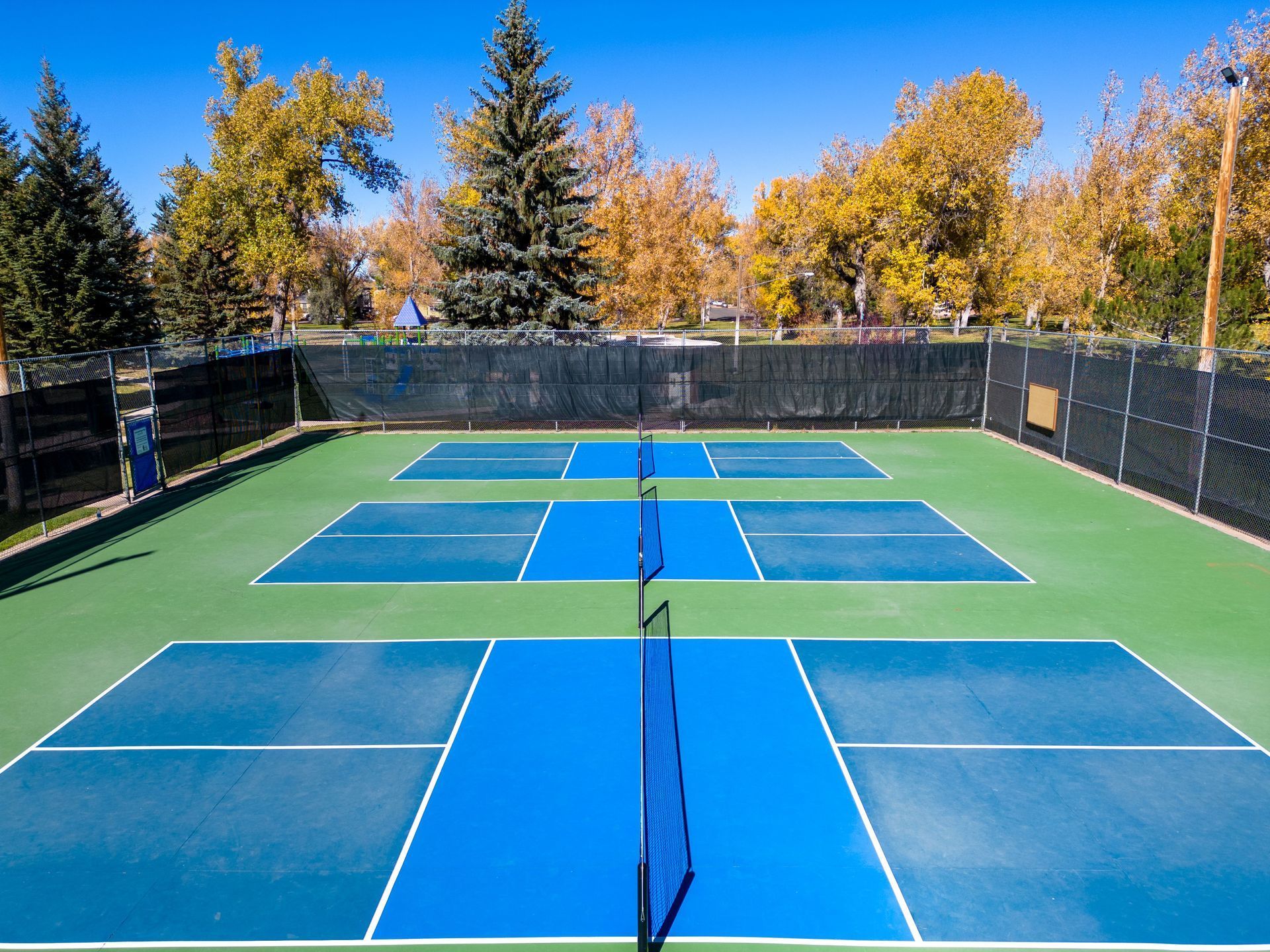
Hard courts are where clubs often add pickleball lines, youth lines or a cushioned surface for members who want something softer than a standard acrylic court. Mor-Sports' typical new hard court sequence is survey and land clearing, a laser-graded lime rock sub base built to ASBA grades and slopes, a laser-paved hot asphalt base, a cushion system if specified, then the acrylic color system and lines.
Lighting for Evening Play
In Florida, lights often decide whether courts get used in summer at all, since evening is the only comfortable window. The industry reference is the Illuminating Engineering Society's ANSI/IES RP-6-24, Lighting Sports and Recreational Areas. The USTA's Tennis Venue Services program classifies tennis lighting as Class I through IV under ASBA guidelines and uses photometric data to confirm the class. Ask your lighting designer which class you're designing to and for a photometric plan that shows light levels on the court and spill at the property line. Neighbors, and in some areas sea turtle rules, make spill control as important as brightness.
Plan light pole foundations and conduit during base construction. Adding lights later means cutting into finished courts.
Accessibility Isn't Optional for Florida Clubs
Under the federal ADA, truly private clubs can be exempt from Title III. The Department of Justice Title III Technical Assistance Manual (III-1.6000) explains that the exemption is lost for any facilities a club opens to nonmembers. Florida goes further. The Florida Building Code, Accessibility, adopted under section 553.503, Florida Statutes, removes the private club exclusion, according to a Florida Building Commission accessibility course. In practice, a permitted club court project should be designed for accessibility.
The key court rules come from the 2010 ADA Standards. Section 206.2.2 requires an accessible route to the boundary of each area of sport activity, and section 206.2.12 requires at least one accessible route that directly connects both sides of a court. That means gate widths, path slopes and how you get between courts all belong in the design, not a punch list. Spectator seating areas also need accessible spaces.
Working With Club Managers and Boards
Club projects run smoother when one person speaks for the club. Name a single point of contact, usually the GM or facilities director, who can make day-to-day calls. Keep the board on milestone decisions: surface, phase dates and any change order. Ask the contractor for a weekly update the GM can forward to the committee as is.
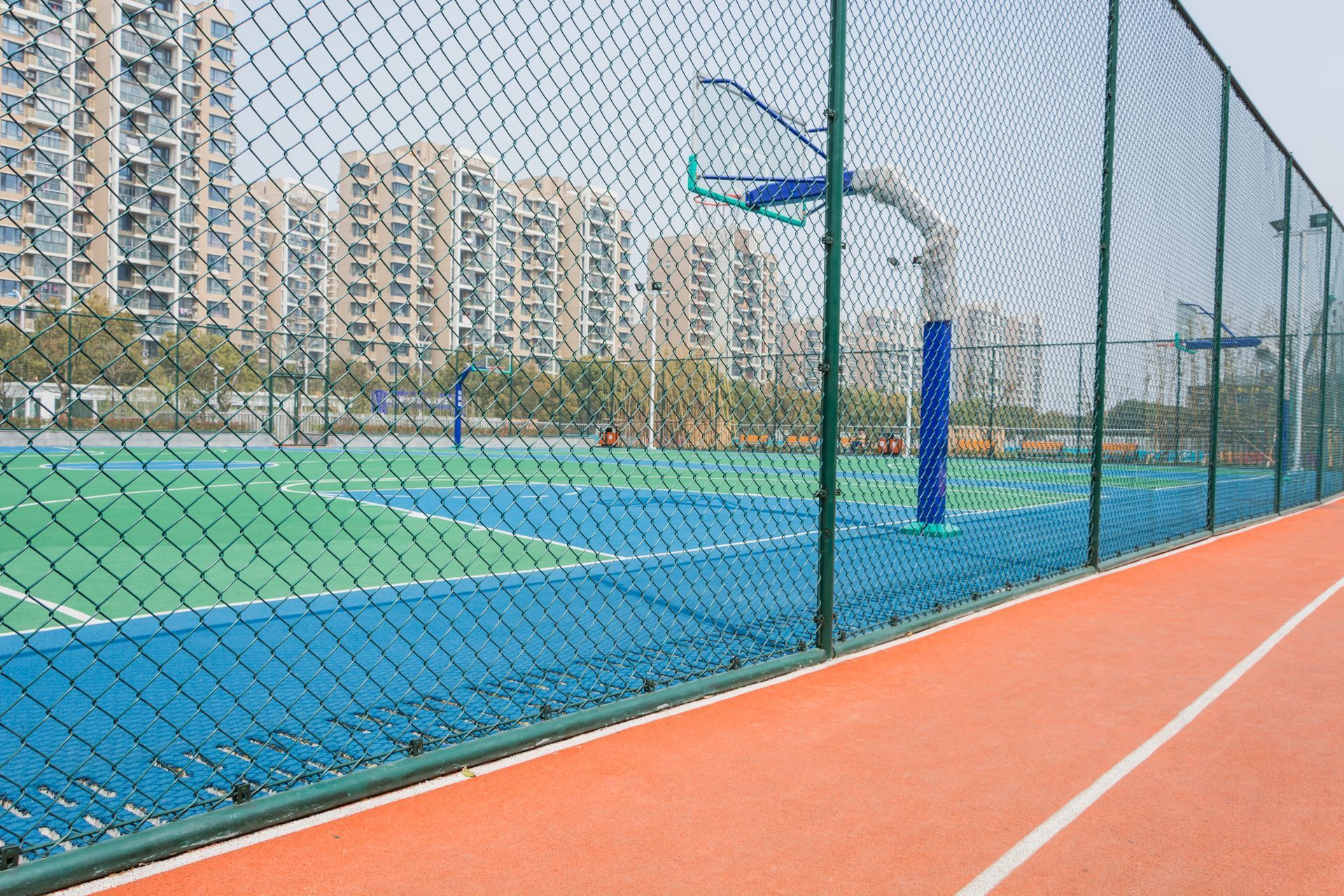
It also helps to know who's doing the work. Mor-Sports crews self-perform the work rather than handing it off to subs, so the people who grade the base are the same team that lays the color coat. Our portfolio project The Dunes includes basketball, pickleball, tennis and bocce courts, built through that same base-to-surface process.
The USTA also offers technical help. Its Tennis Venue Services program reviews design sets for larger projects, asking for a 30 percent design set and then a 60 percent construction set. Eligibility for private clubs isn't spelled out on the program page, so ask USTA directly.
Frequently Asked Questions
How long does a country club court project take?
It depends on court count, phasing, base condition, permitting time and weather. Summer storms in Florida add weather days. Get a phase-by-phase schedule from your contractor rather than one overall date.
Should we build clay or hard courts?
Many Florida clubs build both. Clay plays slower and is easier on joints but needs daily grooming and a watering system. Hard courts need less daily care and handle pickleball lines and heavy play. Base the mix on your membership and maintenance staff.
Do private clubs have to meet ADA rules?
Under Florida's accessibility code, private clubs aren't excluded the way they can be under federal ADA rules. Plan accessible routes to and between courts, and confirm details with your permitting office and club attorney.
Can we add lights later?
Yes, but it costs more and disturbs finished courts. Setting pole foundations and conduit during base work is the cleaner path, even if fixtures come later.
Mor-Sports Group has built courts across Florida and Southern Alabama since 1986 and won a 2026 ASBA Distinguished Facility Award in the Tennis and Pickleball Facility category. If your club is planning new courts or a rebuild, request a free estimate and we'll help you build a phasing plan your board can approve.