
Residential Tennis Court Permit Florida | Florida Backyard Tennis Court Zoning | Private Court Setbacks | Mor-Sports Group
Building a private tennis court in Florida is straightforward on the right property and on the right lot. On a two-acre estate in Windermere or a five-acre property in Wellington, the permitting process is manageable, the setbacks are workable, and a licensed contractor can get you from design through final inspection in four to six months. On a tighter lot in a community with restrictive covenants, the same project can take twice as long and require a variance. Knowing which situation you're in before you hire a contractor is the most valuable thing you can do.
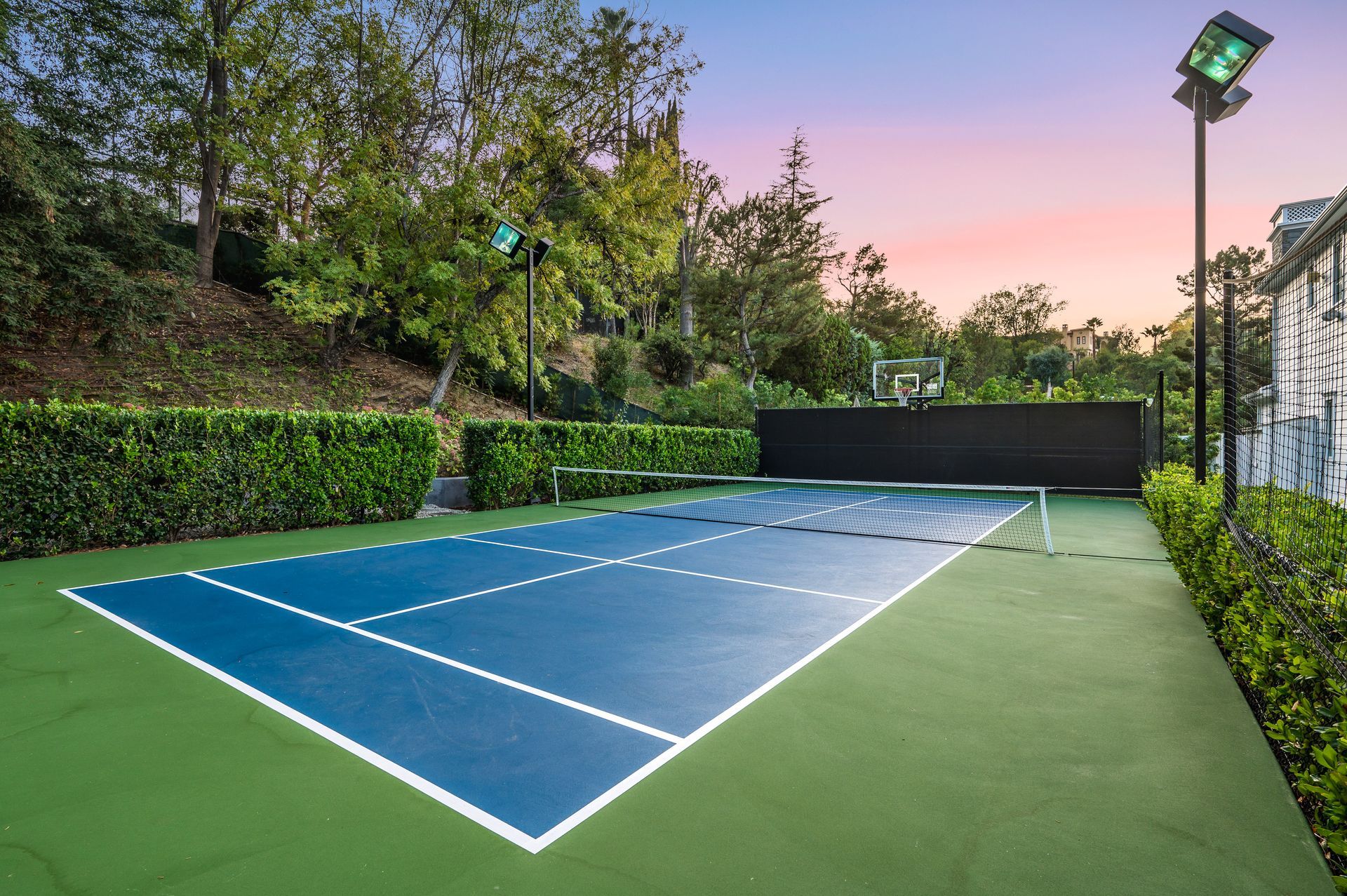
Is a Tennis Court an Accessory Structure in Florida? (Usually Yes)
Florida zoning codes generally classify a residential tennis court as an accessory structure, meaning a structure that is secondary and subordinate to the main residential use of the property. That classification matters because accessory structures are governed by a different set of rules than the primary dwelling, including different setback requirements, height limits, and lot coverage calculations.
The specific classification varies by municipality. Some counties treat a paved court with fencing as a combination of an impervious surface and an accessory structure, each with its own review requirements. Others classify the entire court as a single accessory structure. Your local building department is the authoritative source for the specific classification that applies to your property's zoning district.
In unincorporated county areas, which cover a significant portion of Florida's residential land, county zoning codes apply. In incorporated cities and towns, the municipal code governs. If your property sits on the boundary of an annexation area, confirm which jurisdiction controls before starting the permit process.
Typical Residential Setback and Lot Coverage Rules
Florida residential zoning setback requirements for accessory structures vary considerably by zoning district and municipality, but typical ranges give you a workable planning baseline.
Side setbacks for accessory structures in single-family residential zones in Florida commonly range from five to 15 feet from the property line. Rear setbacks typically range from five to 25 feet. Front yard placement of accessory structures is almost universally prohibited or severely restricted. A full-size tennis court is 60 by 120 feet including run-out space. That's a meaningful footprint that needs to sit entirely within the setback envelope.
Lot coverage limits restrict the percentage of a lot that can be covered by impervious surfaces, including structures, driveways, patios, and courts. In many Florida residential zoning districts, total lot coverage is capped at 25 to 40% of lot area. On a one-acre lot (43,560 square feet), a tennis court with a concrete base occupies roughly 10,000 to 12,000 square feet, which is 23 to 28% of lot area before accounting for the house, driveway, and any other hardscape. On lots under an acre, coverage can be a binding constraint.
Fence, Enclosure, and Screen Cage Permitting
Standard residential fencing regulations in Florida cap fence height at six feet in rear yards and four feet in front yards. A regulation tennis court fence is 10 to 12 feet. That gap requires either a variance, a specific exception in the local code for sports court fencing, or a creative design approach using a combination of fence and landscaping.
Many Florida municipalities have specific provisions for sports court fencing that allow greater heights when specific setback and screening conditions are met. These provisions vary widely. Some require the fence to be set back an additional distance from the property line beyond the base setback requirement. Others require landscape screening to buffer the view from adjacent properties. Check with the local building department before finalizing fence height in the design.
Screen enclosures over residential courts are increasingly common in Florida, particularly in areas with significant mosquito pressure. An enclosed court is classified under the Florida Building Code as a structure, not just fencing, which triggers a building permit and requires engineering calculations for wind load under the High-Velocity Hurricane Zone standards applicable to your location. Don't let a contractor tell you a screen cage doesn't need a permit in Florida. It does.
Lighting and Noise Considerations for Residential Properties
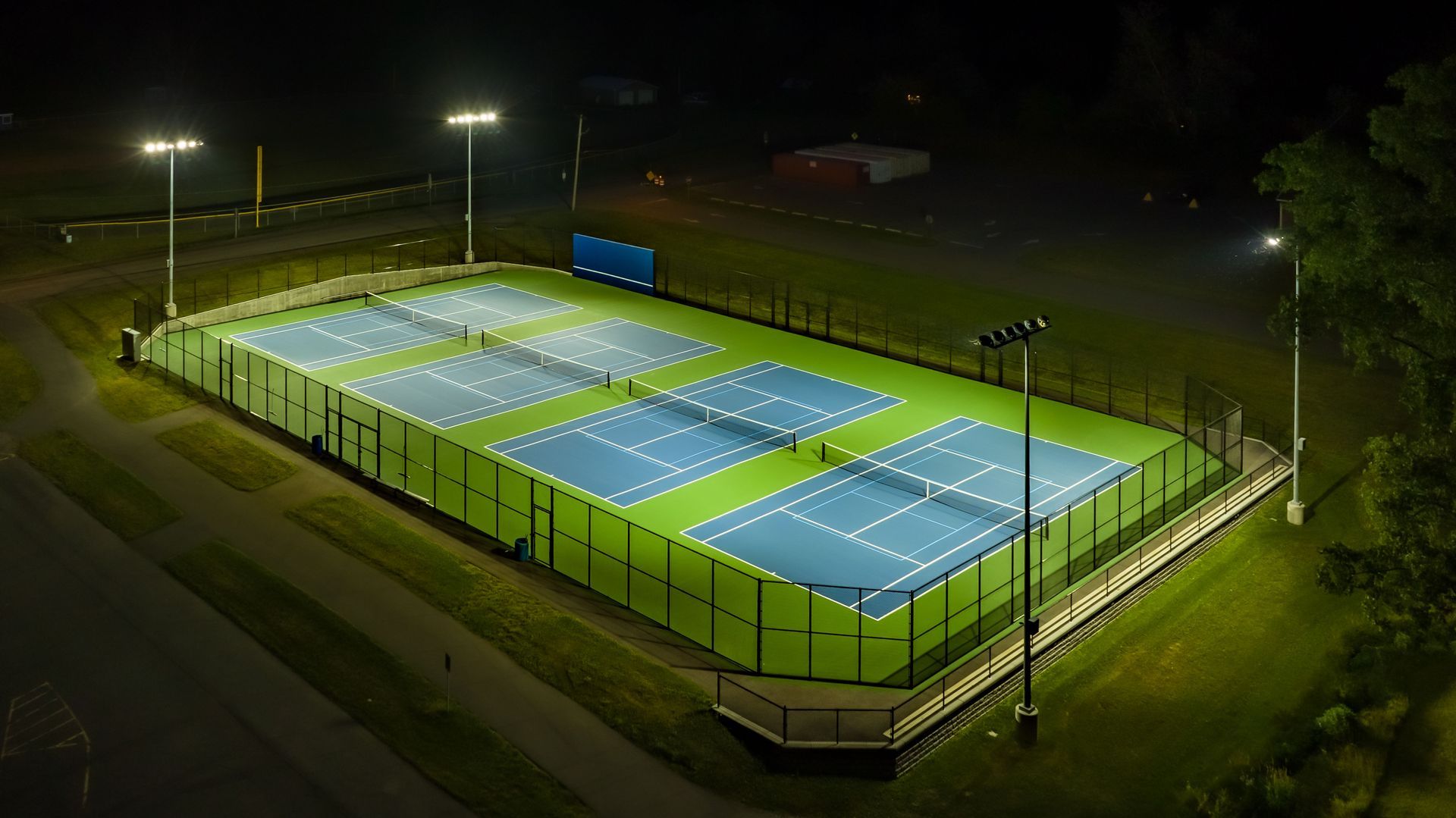
Residential court lighting is subject to local outdoor lighting ordinances that vary by municipality. Most require full-cutoff fixtures and may specify maximum foot-candles or lux levels at the property line to prevent light trespass onto neighboring properties. In practice, a well-designed LED lighting system with full-cutoff optics mounted at 18 to 20 feet satisfies most residential lighting codes while providing adequate illumination for evening play.
Noise is a consideration even for private courts. Pickleball generates more noise than tennis per the discussion in Post 1, and a residential court adjacent to a neighbor's property at 25 feet can generate complaints regardless of whether the court is technically within zoning setbacks. Acoustic fencing, site orientation, and operating hour self-restriction are practical mitigation measures that cost far less than a neighbor dispute.
Some Florida HOA covenants restrict lighting on accessory structures regardless of municipal code. If your property is within an HOA, confirm that court lighting is permitted under the covenants before proceeding with design.
HOA Covenants on Top of Municipal Code
A private residential court on an HOA property must comply with both the municipal code and the HOA's covenants, conditions, and restrictions. Where they conflict, the more restrictive governs.
Most Florida HOA declarations require Architectural Review Committee approval for any exterior construction above a certain value threshold. The ARC review process can add 30 to 60 days to the permit timeline depending on the HOA's meeting cadence and the complexity of the project. Submit to the ARC before applying for building permits, since a building permit doesn't override a declaration denial and you may need to redesign if the ARC requires modifications.
HOA covenants frequently have more restrictive setback requirements than the municipal code, particularly for amenities that could affect the visual character of the community. Some covenants restrict court colors, fencing materials, or lighting entirely. Review the full declaration before committing to a design.
Variance Process If Your Lot Doesn't Fit Standard Setbacks
When a property doesn't meet standard setback requirements for a court, a variance may allow the project to proceed. A variance is a formal exception to a zoning requirement granted by the local zoning board or board of adjustment based on a showing of hardship.
In Florida, the hardship standard for a variance typically requires showing that strict application of the setback rule would deprive the property of a use commonly enjoyed by other similar properties, that the hardship wasn't self-created, and that granting the variance won't adversely affect neighboring properties or the public interest. Meeting this standard for a tennis court variance can be challenging on a smaller lot because courts are not a right and the hardship argument is easier to make for functional uses than for amenities.
Work with a land use attorney familiar with the specific municipality before investing in a variance application. Application fees, hearing timelines, and success rates vary significantly by jurisdiction.
Typical Permit Timeline and Cost in Florida
For a residential tennis court on a property with straightforward setbacks and no variance requirement, the permit timeline in Florida typically runs two to four weeks for permit review in less-active counties and four to eight weeks in South Florida markets where building departments carry heavier loads.
Permit fees are calculated differently across Florida municipalities. Some use a flat fee schedule for accessory structures. Others calculate fees based on construction value. Budget $500 to $3,000 for permit fees on a residential court project, though this can vary significantly. Your contractor should be able to provide a current fee estimate based on recent projects in your municipality.
The full project timeline from initial design through final inspection is typically four to six months for a straightforward residential court. ARC review, a variance process, or a contractor's scheduling backlog can extend that to eight to 12 months. Plan accordingly if you're targeting a specific completion date.
Mor-Sports Group builds private residential courts across Florida. We're a Florida Certified Building Contractor with 35 years of experience, and we handle everything from permitting through final striping. If you're planning a private court, contact us for a consultation.