How to Write a Sports Court Bid Spec for Your HOA or Condo Board
Your board collects three bids for a new pickleball or tennis court. One comes in at $45,000. One at $78,000. One at $61,000. The board picks the $45,000 contractor, breaks ground, and discovers six months later that the base preparation wasn't included, the drainage was undersized, and the lighting was never part of the original scope. The change orders push the final cost past $90,000. This story plays out across Florida HOA communities every year, and it starts the same way: an incomplete bid spec.

Why Most HOA Court Projects Go Over Budget
Scope gaps are the root cause of most HOA court budget failures. When a bid specification doesn't define exactly what's required, contractors interpret ambiguity in their favor. A low bidder may exclude sub-base preparation entirely. Another may spec a surface system that technically meets the letter of a vague spec but fails in three years. A third may include fencing but leave net posts and accessories as line items to be priced later.
When you receive bids against an incomplete spec, you're not comparing costs. You're comparing guesses. The only way to get an apples-to-apples proposal is to define every element of the project before you ask anyone to price it.
In Florida, this problem is compounded by the climate. Drainage, sub-base stability, and surface flexibility requirements in Florida are more demanding than in northern states because of heat cycling, intense rainfall, and ground moisture. A spec that would be adequate in Ohio may produce a failed surface in Florida within two to three years.
The 8 Required Sections of a Proper Court Bid Spec
A complete sports court bid specification for an HOA or condo project should cover eight areas. Each one defines a scope boundary that prevents a contractor from excluding critical work.
Those eight sections are: base and sub-base preparation, surface system, drainage design, fencing, net posts and accessories, lighting, striping and color, and warranty and licensing requirements. If any of these sections is absent from your spec, you're giving contractors room to underprice by omitting that work.
Base and Sub-Base Specifications (The Part Nobody Reads)
Sub-base preparation is the section of a bid spec that boards skip most often and regret most frequently. It's invisible once construction is complete, and price-competitive contractors know that.
A proper sports court sub-base in Florida typically involves removal and disposal of existing vegetation or hardscape, grading to specified slopes (usually 1% grade minimum for drainage), a compacted aggregate base layer to a specified depth and compaction percentage, and a concrete or asphalt wearing surface of specified thickness and mix design.
The spec should state minimum compaction requirements (typically 95% by Proctor standard), the required base depth in inches, and whether a geotextile fabric layer is required between the subgrade and the base material. It should also specify who is responsible for soil testing if unstable subgrade is encountered. Without that last clause, you can get hit with a change order the moment the excavator finds soft soil, which happens frequently in Florida.
For Alabama projects, similar standards apply, though some rural municipalities have less prescriptive requirements. Confirm local code with the building department before finalizing the spec.
Surface System: Acrylic, Cushioned, and Post-Tensioned Concrete
The surface system specification should name the specific product line, not just a generic category. There's a meaningful quality difference between surface systems, and a spec that says 'acrylic coating' allows substitution of lower-grade products.
For Florida HOA courts, the three most common surface systems are standard acrylic on asphalt or concrete, cushioned acrylic on asphalt or concrete, and post-tensioned concrete with an acrylic finish. Each has a different cost, performance profile, and maintenance requirement.
Standard acrylic on concrete is the most economical and most common for recreational play. Cushioned systems add a rubberized layer under the acrylic that reduces joint impact, which matters for the over-50 demographic that makes up a large portion of Florida HOA pickleball players. Post-tensioned concrete eliminates the joint cracking common in standard concrete slabs but carries a higher upfront cost.
Mor-Sports Group builds courts using Laykold and Plexipave surface systems, both manufacturer-certified products with documented performance histories. Naming the product system in your spec prevents substitution with inferior materials after the bid is accepted.
Drainage, Slope, and Stormwater Requirements
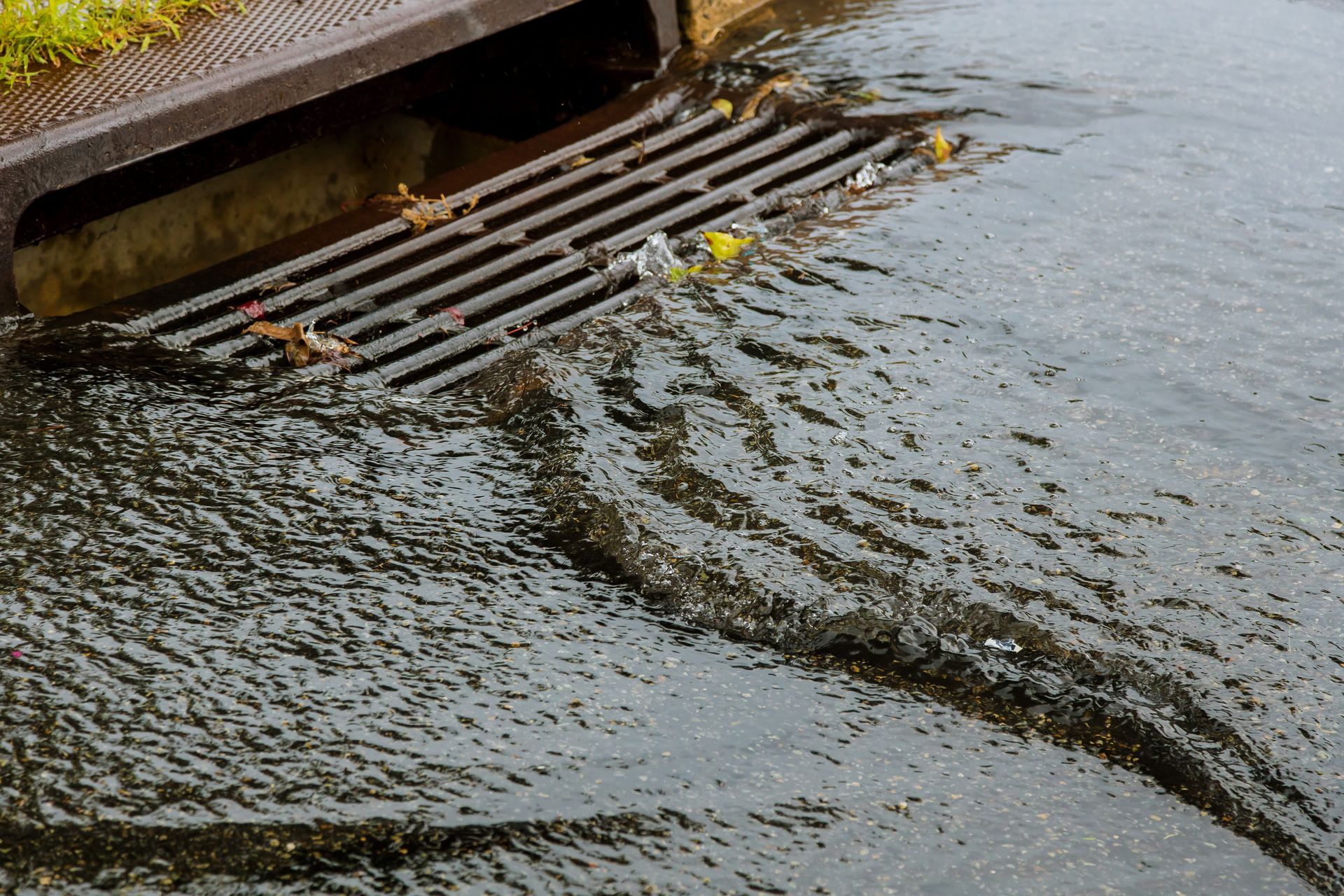
Florida receives 50 to 60 inches of rain per year, with intense storm events concentrated in the June through September wet season. A court that doesn't drain properly will pond water, accelerate surface deterioration, and create slip hazards within a year of construction.
The bid spec should require a minimum 1% slope across the court surface in a specified direction, with a defined drainage outlet or collection point. It should also specify whether a perimeter drainage channel is required and, if so, the channel dimensions and discharge point.
For larger projects or communities in Water Management District review zones, the spec should note that stormwater permit requirements may apply and that the contractor is responsible for confirming permit status before construction begins. Shifting that responsibility to the contractor rather than the board is appropriate because the contractor is the licensed party.
Fencing, Nets, Posts, and Accessories
Fencing specs should define post spacing, post gauge, chain-link gauge, fabric height, and top and bottom rail requirements. A spec that says only 'chain-link fence, 10 feet tall' leaves every variable undefined.
Net post specifications should include whether they're surface-mounted or sleeve-mount, the material, the tensioning mechanism, and whether net straps and center straps are included. These are not trivial details. Net posts that aren't specified correctly produce courts where the net doesn't meet USA Pickleball or ITF standards.
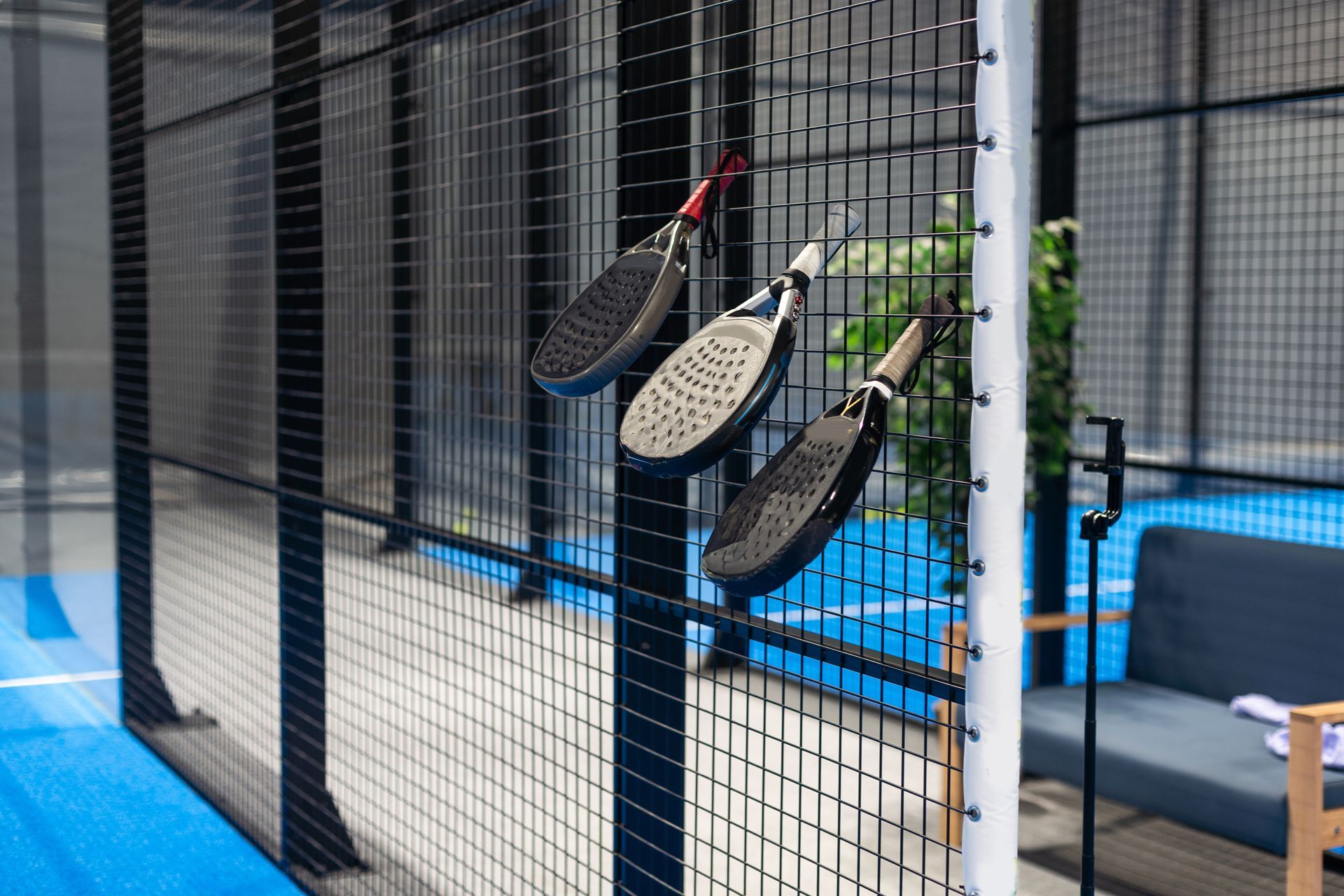
Accessories, meaning net sets, windscreens, court signs, and gate hardware, should either be included in the base spec or explicitly excluded. If they're excluded, the spec should say so and note that they will be purchased separately. This prevents a contractor from citing an omission to deny responsibility for items the board assumed were included.
Lighting, Striping, and Color Specifications
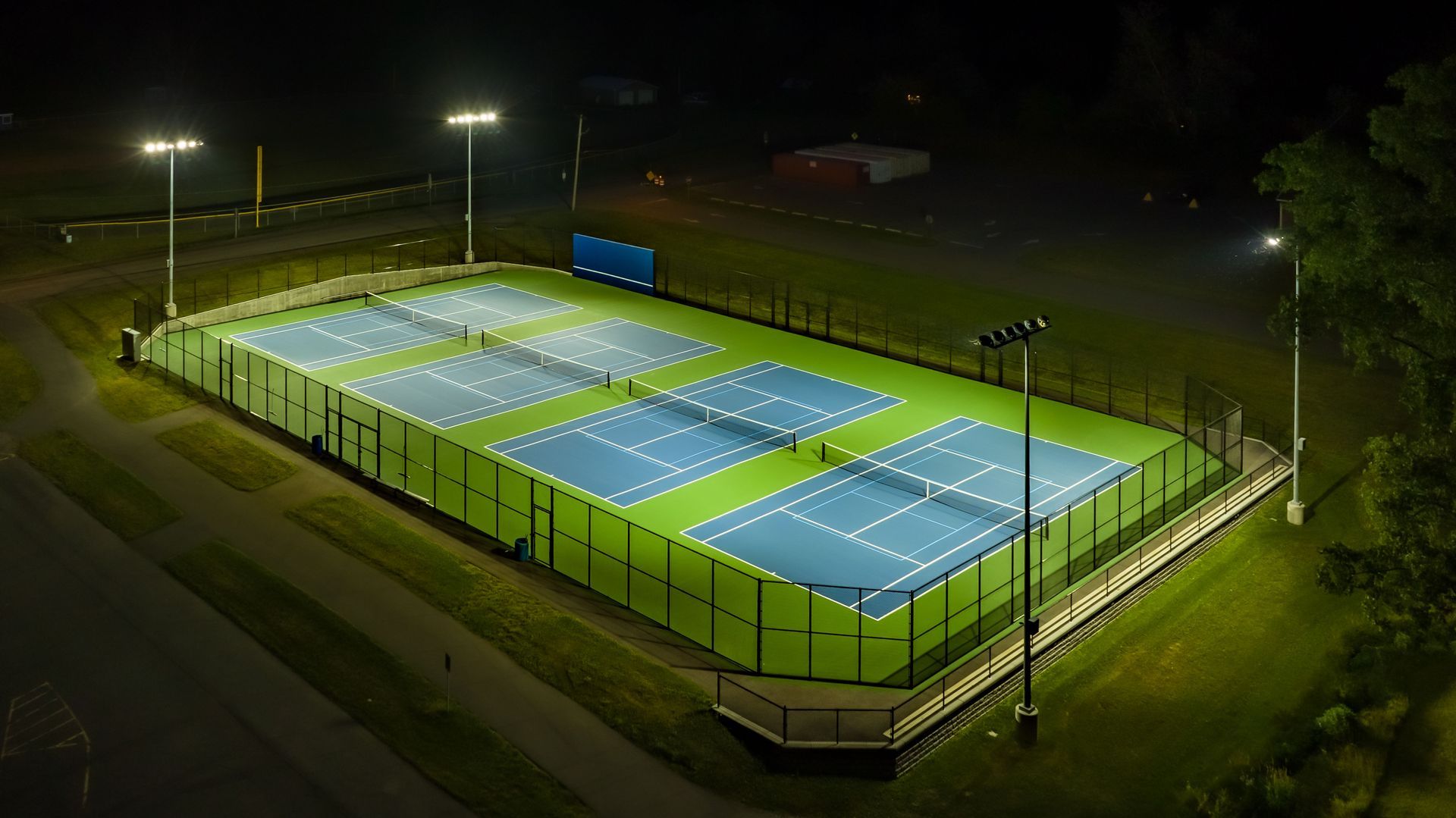
Lighting should specify fixture type (LED recommended), mounting height in feet, pole spacing, foot-candle levels at the court surface, and whether full-cutoff fixtures are required. In Florida communities with dark-sky or light-trespass ordinances, full-cutoff specification is not optional.
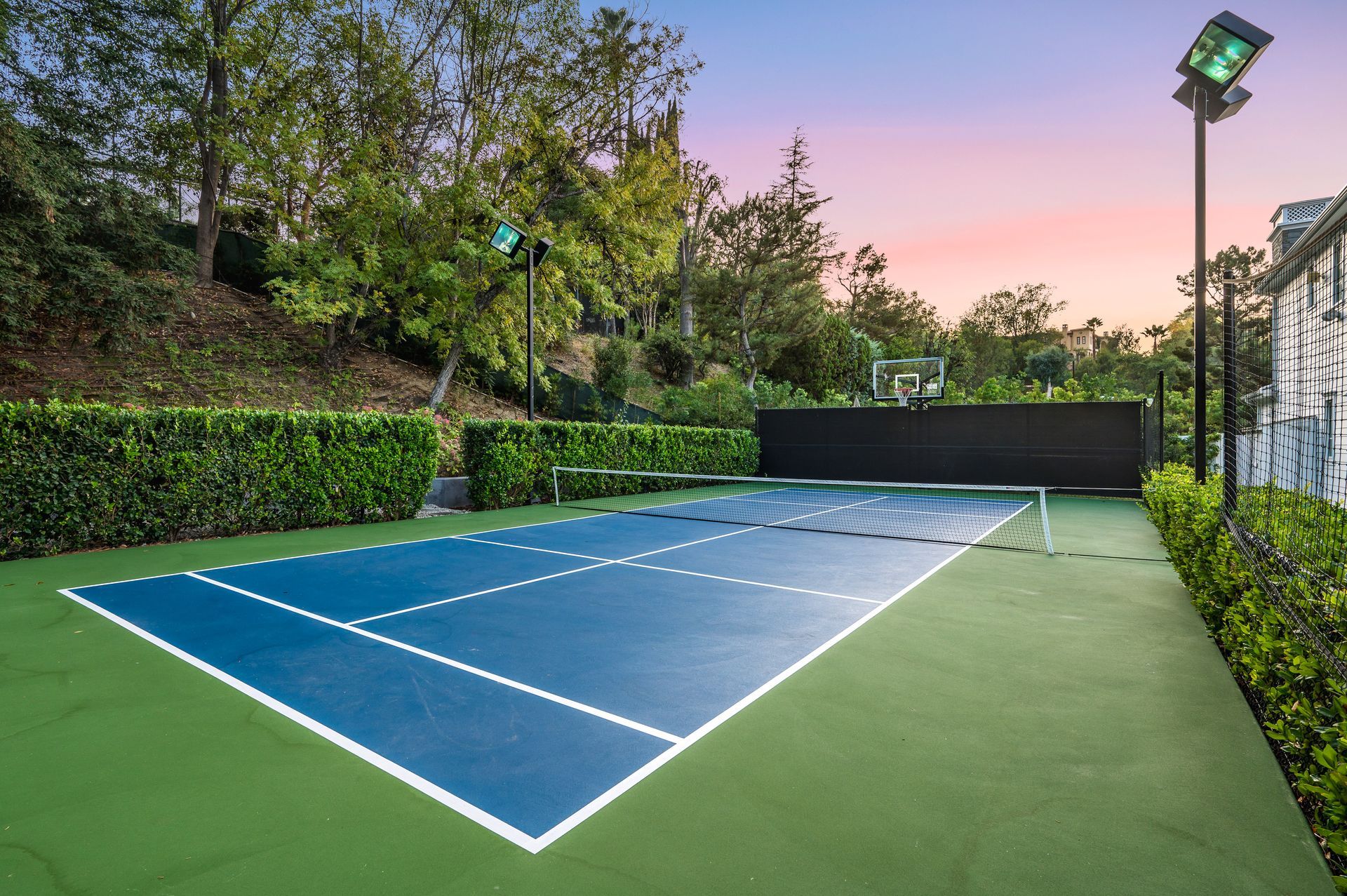
Striping specifications should name the court lines to be painted (pickleball, tennis, or both), the line width, and the line color. For dual-use courts, specify which sport's lines are primary and which are secondary, and name the colors for each. Color specification should reference standard USA Pickleball or USTA color ranges, not just 'yellow' or 'white.'
Court color, meaning the playing surface fill color, should be specified by product name or color code from the surface manufacturer. Courts that say 'light blue and dark blue' will get whatever the contractor has on hand unless the spec names specific colors.
Warranty, Insurance, and Licensing Requirements
The final section of your spec should establish the minimum credentials required to bid the project. In Florida, this means a valid Florida Certified Building Contractor license or equivalent specialty license. In Alabama, it means an Alabama Home Builders Licensure Board license for projects above the threshold that requires one.
The spec should require proof of general liability insurance at a minimum of $1 million per occurrence, workers' compensation coverage for all employees, and a certificate of insurance naming the HOA or condo association as an additional insured.
Warranty requirements should specify a minimum surface warranty in years (typically three to five for the coating system), a workmanship warranty, and the process for filing a warranty claim. A contractor who won't commit to a written surface warranty is telling you something about their confidence in their own work.
Mor-Sports Group is a Florida Certified Building Contractor and ASBA member. We provide detailed, line-item proposals for HOA and condo court construction projects across Florida and Alabama. If your board is preparing for a court project, contact us for a consultation or request a proposal directly.